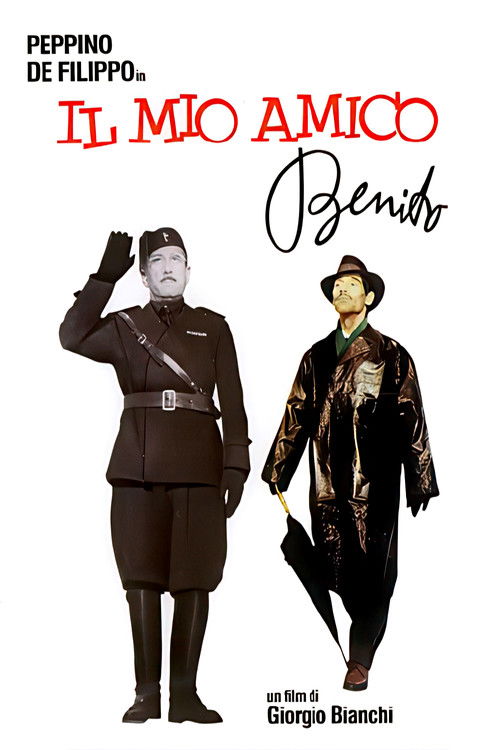
Il mio amico Benito
1962
No user ratings available yet
Representation score: 1.9 out of 10
Representation Score
Limited
1962
Director
Giorgio Bianchi
Runtime
96 minutes
Average Rating
No ratings yetNew Showbiz Analysis
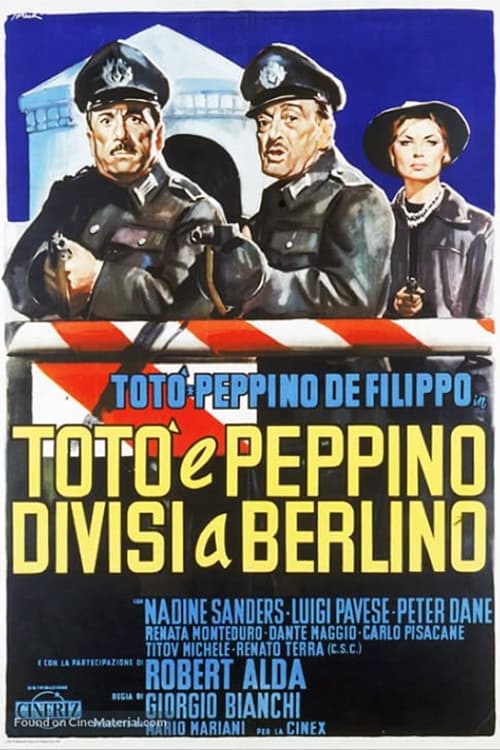
Totò e Peppino divisi a Berlino is a period-specific comedy that prioritizes slapstick and mistaken identity over social commentary. It functions as a vehicle for its comedic leads, using the geopolitical tensions of the Cold War as a backdrop for farce. The film reflects the social norms of 1962, focusing on European geopolitical divides rather than diverse identities. It lacks representation across most diversity metrics, adhering to traditional hierarchies and homogeneous casting. Ultimately, the production aims to entertain through situational irony rather than challenging established social or cultural structures.
Category Breakdown
The film does not include any LGBTQ+ characters or narratives. The humor revolves around a traditional male dynamic without addressing queer identities.
The story centers almost entirely on male characters. A female character starts the main deception but is used mainly as a plot device rather than a fully developed individual.
Set in a divided Berlin, the film features a homogeneous cast typical of 1960s European comedies. It lacks diverse ethnicities or casting choices that challenge the status quo.
The film criticizes the absurdity of Cold War bureaucracy and the division of Berlin. However, it avoids systemic critiques of religion, capitalism, or the family unit.
There are no prominent depictions of physical or neurodivergent disabilities. Characters are shown as able-bodied individuals navigating physical obstacles within the slapstick framework.
Present on Screen
Limited or Absent
Official Synopsis
Antonio goes to West Berlin and meets Giuseppe. But Antonio looks like Canarinis, a wanted war criminal, So the daughter of the criminal pays Antonio to impersonate him.
1962

1976

1961
1973
1958

1950

1961

1963
No reviews yet. Be the first to share your thoughts on this movie!
Use the rating form above to leave a star rating and optional review.