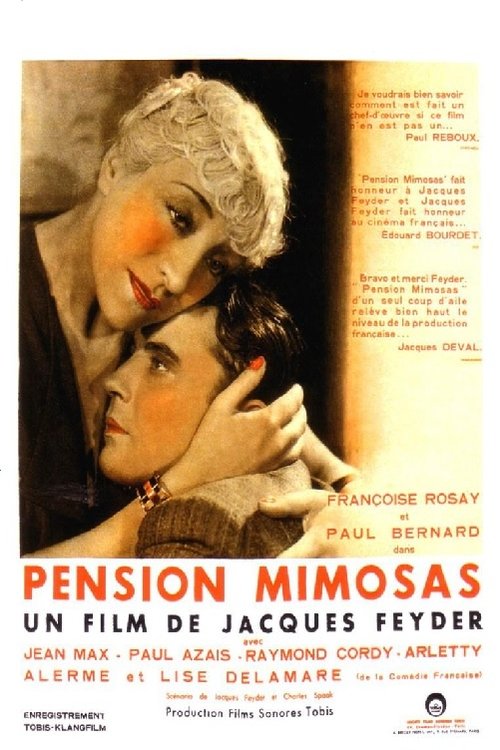
Pension Mimosas
1935
No user ratings available yet
Representation score: 1.2 out of 10

Representation Score
Limited
1943
Director
Maurice Tourneur
Runtime
88 minutes
Average Rating
No ratings yetNew Showbiz Analysis
Valley of Hell is a period drama that closely follows the social and narrative norms of the 1940s. It emphasizes traditional dramatic elements such as class conflict, crime, and family obligations over representing diverse identities. The film's structure depends on conventional gender roles and social hierarchies. While it examines the struggles of the poor, it does so through a lens of traditional resolution rather than systemic criticism. Overall, the work serves as a typical mid-century drama, offering limited multi-layered diversity or challenges to established social norms.
Category Breakdown
The film does not include any LGBTQ+ characters or stories that challenge the assumption that everyone is straight or cisgender. The main plot revolves around a traditional romance ending in marriage.
The story focuses on a male character dealing with family responsibilities. Marthe's storyline follows older ideas of women being dependent on men, moving from poverty to marriage with a male benefactor.
Set in a specific European social context, the film mirrors the demographic uniformity of its time. The narrative centers on class issues within a French setting.
Themes of social unrest and family obligations drive the plot. The ending supports traditional social structures rather than questioning Western institutions or capitalism.
The film does not feature any characters with visible or invisible disabilities, neurodivergence, or chronic illnesses.
Present on Screen
Limited or Absent
Official Synopsis
Noël Bienvenu, owner of a career, is a widower and lives with his parents. His son Bastien, whom he despises, was sentenced to six months in prison for theft. Noël goes to see a dying friend, Romieux, who asks him to take care of his daughter Marthe, who has settled in Paris (Batignolles district). Noël goes there and discovers that Marthe is destitute (her lover Gaston being an incarcerated mobster): he then offers her to come and live with him and soon, marries her.
1935

1938

1942

1952
1932
1949
1934
1937
No reviews yet. Be the first to share your thoughts on this movie!
Use the rating form above to leave a star rating and optional review.