
Valley of Hell
1943
No user ratings available yet
Representation score: 2.9 out of 10
Representation Score
Minimal
1935
Director
Jacques Feyder
Runtime
109 minutes
Average Rating
No ratings yetNew Showbiz Analysis
Jacques Feyder’s drama centers on the moral complexities of personal relationships rather than a critique of societal structures. It emphasizes the emotional depth of maternal bonds and the intricacies of social class. The film is a typical product of its time, concentrating on the internal social hierarchies of the French middle class. While it provides nuanced depictions of women dealing with economic pressures, it does not explore multi-layered issues. Overall, the narrative stays true to the social and cultural norms of mid-1930s European cinema, presenting a realistic yet non-challenging portrayal of domestic and social life.
Category Breakdown
The film follows the traditional romantic relationships and courtship norms of the 1930s, focusing on heterosexual pairings and their dynamics.
Louise Noblet shows strong emotional influence and maternal leadership. Meanwhile, Nelly deals with societal constraints through economic practicality and traditional household roles.
The cast is shown as a uniform group of Europeans. There is no indication of racial diversity or non-white actors in the French Riviera setting.
The drama highlights the tension between stable upper-middle-class life and activities on the fringes of legality. Traditional social structures are reinforced through themes of family and social standing.
There are no characters with physical, sensory, or neurodevelopmental disabilities. Disability is not utilized as a plot device.
Present on Screen
Limited or Absent
Official Synopsis
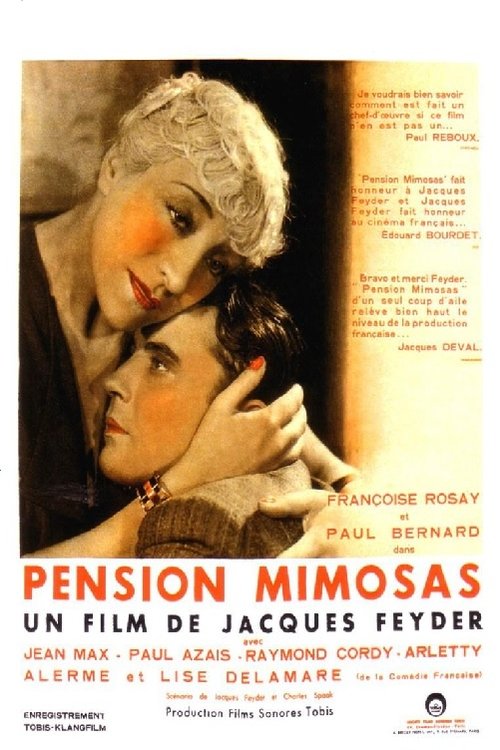
Mr. and Mrs. Noblet run a boarding house on the French Riviera. One day, they are led by circumstances to welcome a little boy Pierre, whose father is in jail, into their home. Which makes Louise Noblet all the happier as she can't have children herself. But, after a while, Pierre's father is released from prison and reclaims his son... Time passes and Pierre, now a young adult, lives in Paris more or less on the wrong side of the law. He has a mistress, Nelly, who does not say no to other men's money... Louise, who still loves Pierre as her own son, wants only one thing - to help him get by.
1943
1938

1938
1931
1927
1927

1933

1921
No reviews yet. Be the first to share your thoughts on this movie!
Use the rating form above to leave a star rating and optional review.