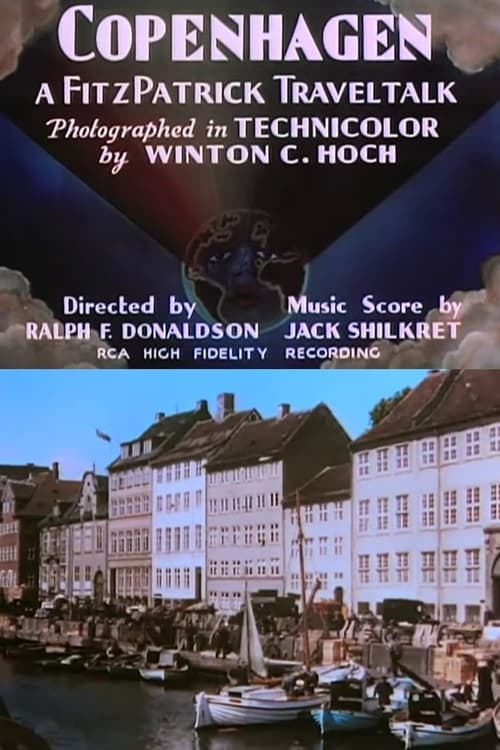
Copenhagen
1937
No user ratings available yet
Representation score: 1.1 out of 10
Representation Score
Limited
1960
Director
Jørgen Roos
Runtime
22 minutes
Average Rating
No ratings yetNew Showbiz Analysis
This documentary functions as a window into mid-century Danish urban life. Because it is an observational work rather than a character-driven narrative, it lacks a scripted protagonist to challenge existing social norms. The film's composition is a product of its 1960s context, capturing the sociological landscape of the time. It provides a neutral record of a specific era without actively challenging existing social hierarchies. Ultimately, the work serves as a historical document of a homogeneous urban environment, reflecting the demographic and social structures of mid-century Europe.
Category Breakdown
The film reflects the social norms of 1960s Denmark. There are no explicit LGBTQ+ identities or depictions of people whose gender doesn't match what they were assigned at birth.
The documentary captures the division of labor and public spheres of the era. While women appear in various urban roles, the visual hierarchy reflects traditional 1960s gender structures.
Copenhagen is presented as a relatively homogeneous environment. This reflects the demographic reality of Denmark during this specific historical period.
The film focuses on the secular, daily rhythms of a modernizing city. It avoids religious morality and patriotic clichés in favor of a neutral, observational stance.
There are no prominent or central depictions of disability. The focus remains on the general movement and commerce of the urban landscape.
Present on Screen
Limited or Absent
Official Synopsis
Oscar nominated documentary short from Denmark, 1960
1937

1929
1947

1927
1947
1949
1950

1969
No reviews yet. Be the first to share your thoughts on this movie!
Use the rating form above to leave a star rating and optional review.