
Road to Zanzibar
1941
No user ratings available yet
Representation score: 0.4 out of 10
Representation Score
Minimal
1961
Director
Fred Hudson, Larry Smith
Runtime
60 minutes
Average Rating
No ratings yetNew Showbiz Analysis
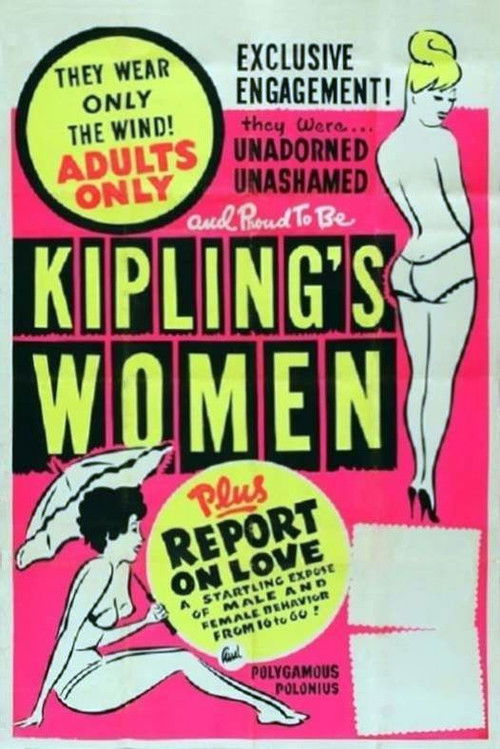
Kipling's Women functions primarily as an exploitation film, prioritizing voyeurism over narrative depth. The structure relies on a male protagonist recounting sexual encounters, reinforcing traditional gender hierarchies and a patriarchal worldview. The film's thematic roots in Rudyard Kipling's work suggest a reliance on colonial-era perspectives. While the setting is global, the representation of diverse ethnicities likely leans into exoticism rather than nuanced ability to act. Ultimately, the production lacks multi-layered storytelling. It operates within the established social and cultural clichés of the early 1960s, offering escapism rather than social subversion.
Category Breakdown
The film doesn't include any LGBTQ+ characters or narratives. It follows the traditional heterosexual dynamics common in the early 1960s exploitation genre.
The story focuses on a male soldier's perspective, using a patriarchal viewpoint. Women play important roles but have limited control over their own lives.
The film's connection to Kipling suggests colonial themes. While it includes women from around the world, these depictions likely rely on exoticism and colonial clichés.
The setting reflects mid-century Western escapism, centered around a comfortable Western environment. It lacks any critique of systemic institutions or religious morality.
There are no characters with visible or invisible disabilities. The genre's focus on physical aesthetics makes meaningful disability representation unlikely.
Present on Screen
Limited or Absent
Official Synopsis
The nudie film is inspired by a Kipling poem and follows retired soldier Tommy Atkins, who recounts his experiences with women around the world while enjoying a pipe and Scotch in a pine lodge.
1941
1953
1928
1963
1975
1964
1926
1985
No reviews yet. Be the first to share your thoughts on this movie!
Use the rating form above to leave a star rating and optional review.