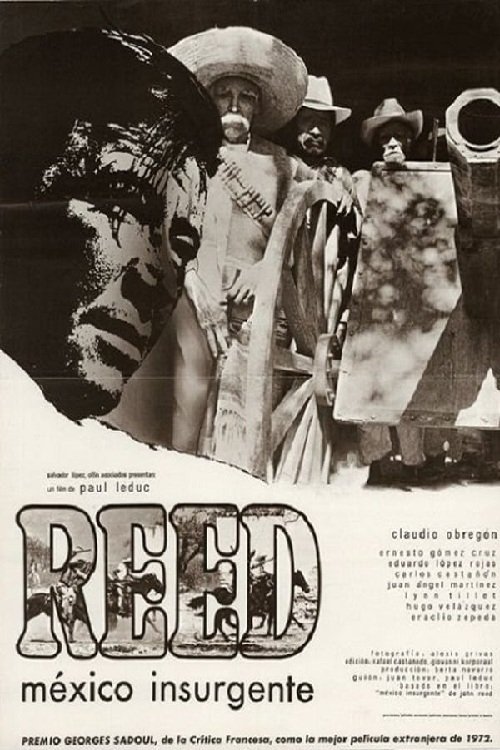
Reed: Insurgent Mexico
1972
No user ratings available yet
Representation score: 7.0 out of 10
No Poster Available
Representation Score
Good
1978
Director
Octavio Cortázar
Runtime
119 minutes
Average Rating
No ratings yetNew Showbiz Analysis
El brigadista is a powerful piece of historical revisionism that centers the ability to act of underrepresented rural populations. It successfully avoids the 'civilized vs. primitive' cliché by presenting a sophisticated view of communal literacy and social organization. The film's strength lies in its anti-colonialist themes and its refusal to adopt a Western-centric lens. By focusing on the Zapata swamps and the grassroots movement, it elevates non-elite identities. However, the film remains limited in its exploration of individual identity, specifically regarding LGBTQ+ representation and disability, as the narrative focus remains strictly on class and revolutionary struggle.
Category Breakdown
The film emphasizes class struggle and literacy rather than LGBTQ identities. It avoids traditional nuclear family clichés by highlighting communal bonds but does not explicitly challenge gendered sexuality.
The story deconstructs the 'male savior' cliché by focusing on a reciprocal exchange of knowledge. Mario's journey involves giving up urban superiority to learn from the rural working class.
The film excels by centering Afro-Cuban and mestizo peasants. It avoids a whitewashed perspective, presenting rural workers as active participants with significant influence rather than passive recipients.
The film is deeply rooted in anti-imperialist frameworks, prioritizing collective social advancement. It frames the literacy campaign against the Bay of Pigs to highlight local progress against Western intervention.
There is no significant evidence regarding the portrayal of physical or neurodivergent disabilities in this work.
Present on Screen
Limited or Absent
Official Synopsis
The Castro revolution was just consolidating its power when, in 1961, over 100,000 students were sent from their schools into the countryside to teach the peasants there how to read. Coinciding with the Bay of Pigs invasion, in this docudrama, 15-year-old Mario (Salvador Wood) has come to a tiny village in the Zapata swamps and gradually wins the villagers over to his task. At the same time, he receives an education in the realities of rural life from the hard-working peasants.
1972

1964

1987

1966

1998

1995

1975
2008
No reviews yet. Be the first to share your thoughts on this movie!
Use the rating form above to leave a star rating and optional review.