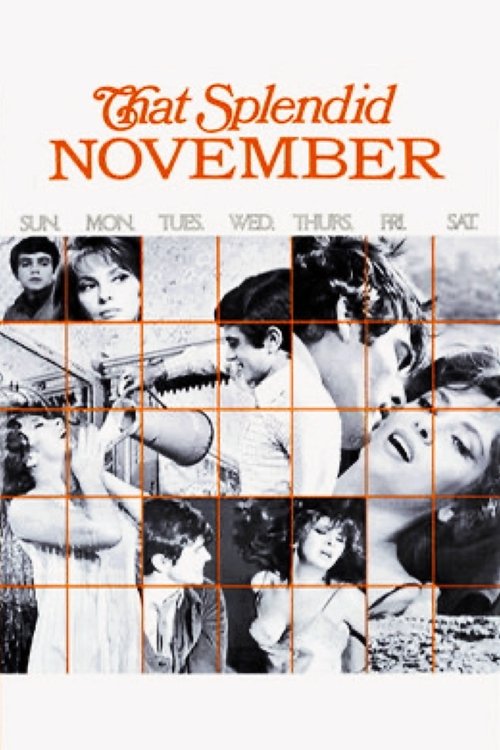
That Splendid November
1969
No user ratings available yet
Representation score: 4.9 out of 10
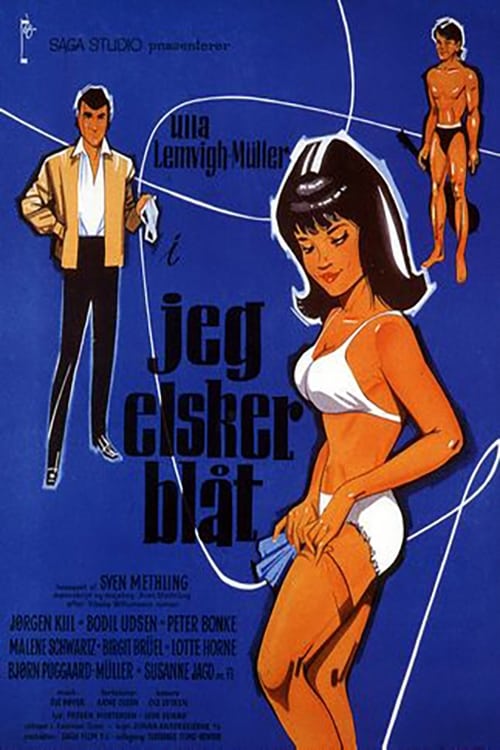
Representation Score
Fair
1968
Director
Sven Methling
Runtime
83 minutes
Average Rating
No ratings yetNew Showbiz Analysis
Sven Methling’s social realism highlights the gritty, uncomfortable truths of working-class life. The film excels by emphasizing female autonomy and dismantling idealized social structures through Judith's challenging decisions. However, the film remains narrowly focused demographically. It lacks racial and LGBTQ+ diversity, adhering to the historically specific and homogeneous context of 1960s Danish social realism. Ultimately, the work is culturally disruptive. It replaces escapism with a critique of restrictive societal institutions, making it a progressive exploration of autonomy despite its limited demographic scope.
Category Breakdown
The story centers on heterosexual relationships and reproductive issues. There is no indication of queer subtext or diverse gender identities.
Judith is shown as a key driver of her own life rather than a supporting character. Her choices about education, partners, and abortion challenge traditional gender roles.
The film seems to feature an ethnically uniform Danish cast. There is no evidence of diverse racial representation or challenging casting norms.
The film questions traditional institutions by focusing on subjective morality rather than religious standards. It tackles taboo topics such as illegal abortions and significant age differences in relationships.
There is no documented evidence of physical or cognitive disabilities being represented in this work.
Present on Screen
Limited or Absent
Official Synopsis
A socially realistic film about a fifteen-year-old girl and her problems with love. Judith comes from a working-class home and does not want to continue her education. After having a relationship with a man twenty years her senior, she meets seventeen-year-old rock musician Willy, with whom she becomes pregnant. Willy does not really interest her, and she has an illegal abortion.
1969
1961
1962

1953
1957
1960
1975
1977
No reviews yet. Be the first to share your thoughts on this movie!
Use the rating form above to leave a star rating and optional review.