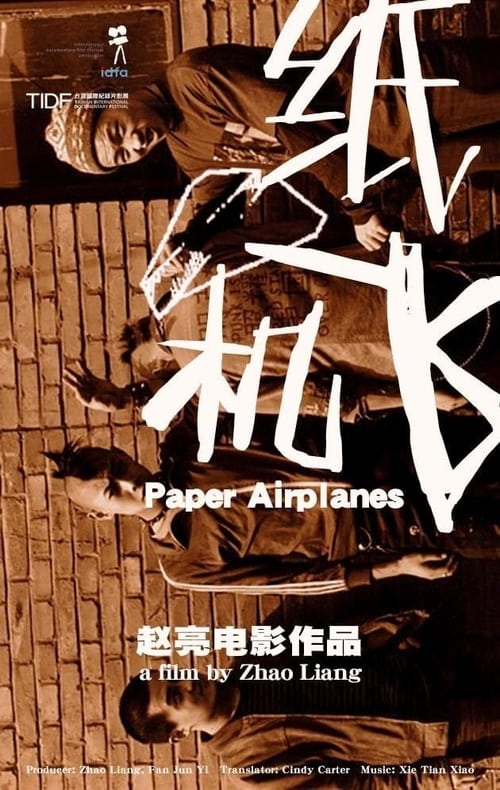
Paper Airplanes
2001
No user ratings available yet
Representation score: 5.7 out of 10
Representation Score
Good
2005
PGDirector
Zhao Liang
Runtime
56 minutes
Average Rating
No ratings yetNew Showbiz Analysis
Zhao Liang’s documentary stands as a crucial example of ethnographic filmmaking that focuses on voices often overlooked in global politics. By concentrating on the Chinese-North Korean border, the film avoids simple black-and-white distinctions and delves deeply into the evolution of East Asian societies. The film's strength lies in its ability to challenge the Western-centric perspective commonly found in global cinema. It observes broad systemic changes and their impact on individuals and cultural identities rather than relying on traditional hero-centric clichés. However, the film does not provide specific examples of LGBTQ+ identities or disability representation. While it excels at offering non-Western viewpoints, it does not explicitly explore these particular identity-focused narratives.
Category Breakdown
The film does not include any explicit references to LGBTQ+ stories or non-cisgender identities. It maintains a neutral stance within the specific cultural context of the Yalu River border area.
The documentary examines how traditional gender roles might have changed due to different political and economic conditions. It offers a detailed look at how gender roles play out in both domestic and labor contexts.
The film highlights diverse representations of non-Western, East Asian populations. It challenges the Western-centric viewpoint by focusing on the daily lives of people in Chinese and North Korean societies.
The narrative questions Western-centric views of geopolitics by highlighting internal societal changes. It looks closely at how life within tightly controlled systems affects people's daily lives and cultural identities.
There is no specific mention of how physical or neurodivergent disabilities are portrayed in this work.
Present on Screen
Limited or Absent
Official Synopsis
Return to the Border is a documentary directed by Zhao Liang about his return to his hometown in China that borders the Yalu river and North Korea. The film presents deep insight into both the Chinese and North Korean societies and changes that have taken place over the last several decades.
2001
2015
2007

2015
2006
2017
2001
2020
No reviews yet. Be the first to share your thoughts on this movie!
Use the rating form above to leave a star rating and optional review.