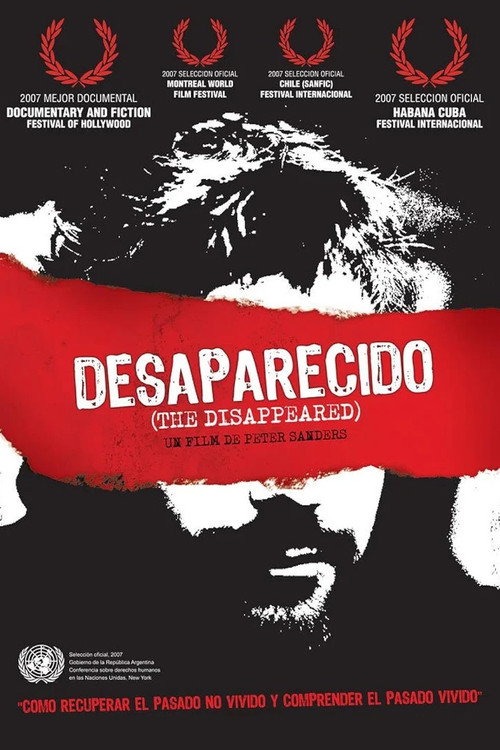
The Disappeared
2008
No user ratings available yet
Representation score: 4.5 out of 10
Representation Score
Excellent
2008
Director
José Pedro Charlo, Aldo Garay
Runtime
92 minutes
Average Rating
No ratings yetNew Showbiz Analysis
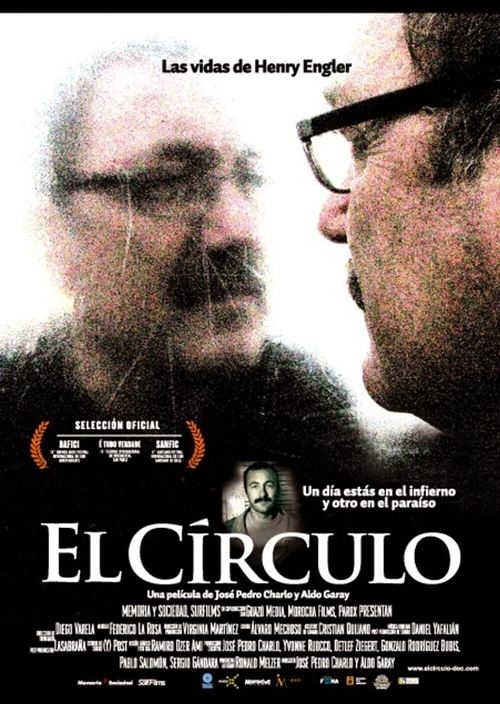
The Circle serves as a powerful historical critique, focusing on the intersection of individual psychology and state-sponsored violence. It deconstructs political authority and explores systemic trauma through a non-Western lens. While the film lacks explicit LGBTQ+ representation, it provides significant depth in cultural and disability representation. It avoids clichés by focusing on the intellectual and emotional evolution of its subject. Ultimately, the documentary's strength lies in its ability to challenge dominant historical narratives and provide a platform for Latin American political history.
Category Breakdown
The film does not include any explicit LGBTQ+ characters or themes. It focuses on the personal journey of a specific individual.
The story revolves around Henry Engler, a male character. It challenges traditional masculine stereotypes by emphasizing his emotional and cognitive resilience over physical strength.
The documentary highlights a Latin American perspective, challenging Anglo-centric historical narratives by centering a Uruguayan subject and the socio-political context of the Southern Cone.
The film critiques Western-aligned power structures and state oppression. It emphasizes a shift towards scientific rationalism over traditional moral frameworks.
The documentary examines psychological trauma and invisible disabilities through the lens of mental health. It gives the subject ability to act regarding his cognitive and emotional experiences.
Present on Screen
Limited or Absent
Official Synopsis
Award-winning documentary about how one Uruguayan leftist survived solitary confinement during the dirty war. The story of former Tupamaro guerilla fighter, Henry Engler, whose prolonged confinement and torture during the Uruguayan dictatorship led to a mental breakdown. Today Dr. Engler is a Swedish citizen and a scientist renowned for his research into Alzheimer’s disease. In this impressive documentary, the scientist visits the places of his painful past, painting an intimate and disturbing portrait of prison life under the dictatorship.
2008

2011

2018
2018

2008

2011

2017

2008
No reviews yet. Be the first to share your thoughts on this movie!
Use the rating form above to leave a star rating and optional review.