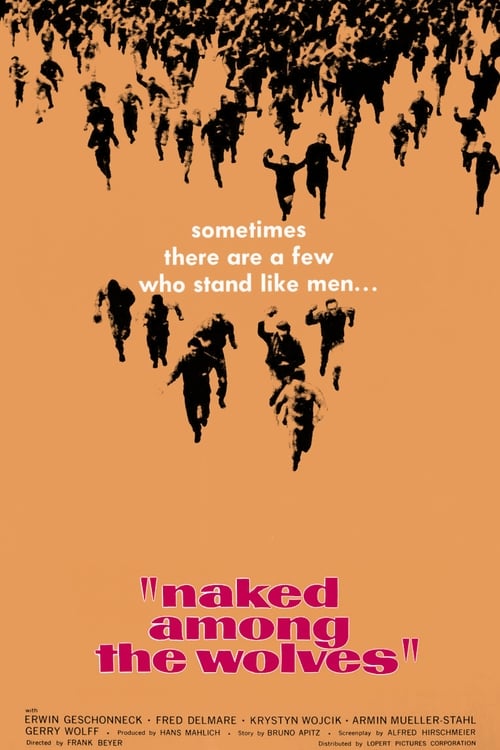
Naked Among Wolves
1963
No user ratings available yet
Representation score: 5.6 out of 10

Representation Score
Fair
1959
Director
Heiner Carow
Runtime
63 minutes
Average Rating
No ratings yetNew Showbiz Analysis
Heiner Carow’s drama serves as a historical critique of systemic oppression during WWII. It avoids traditional wartime heroism, focusing instead on the vulnerability of a refugee and the political victimization of the working class. The film excels at exposing institutional cruelty, particularly through the depiction of a child being arrested by the state. This highlights the targeting of individuals by authoritarian regimes. While the film is strong in its socio-political commentary, it remains limited in its breadth of representation. The narrative is heavily male-centric and lacks explicit engagement with LGBTQ+ identities or diverse ethnic casting.
Category Breakdown
The film does not explicitly depict LGBTQ+ identities or relationships that go beyond the assumption that everyone is straight. Instead, it focuses on wartime survival and the political impact on young people.
The story centers on male-driven experiences, especially the bond between a refugee and a group of boys. It lacks detailed female character arcs and does not challenge traditional gender roles.
Set in WWII Berlin, the film explores themes of systemic oppression through the experience of a refugee. However, the specific ethnic makeup of the supporting cast is not clearly defined.
The film strongly critiques fascist and nationalist structures. By focusing on the son of a communist, it presents socialist frameworks as morally justified.
There are no visible or invisible disabilities mentioned as central to the character arcs in this narrative.
Present on Screen
Limited or Absent
Official Synopsis
A refugee from a Nazi concentration camp is discovered by some boys in WWII Berlin. They provide him with food and help him to continue his flight. Later one of the boys, the son of a communist, is charged with theft, arrested and sent to a concentration camp.
1963
2015
1946
1948

1968

1959

1946

1997
No reviews yet. Be the first to share your thoughts on this movie!
Use the rating form above to leave a star rating and optional review.