24 Frames
2018
No user ratings available yet
Representation score: 5.4 out of 10
Representation Score
Fair
2024
Director
Man Ray
Runtime
70 minutes
Average Rating
No ratings yetNew Showbiz Analysis
The screen is black, then a white circle expands and contracts like a breathing lung. This is not a film with a plot; it is a series of photographic studies animated by light and shadow. The collection, curated with a new score by SQÜRL, presents four short films by Man Ray, where the human face is treated not as a window to the soul, but as a surface to be played with. The camera loves Kiki de Montparnasse. She is the "holy" object of the gaze, her features sharp and unyielding, staring back with a flat, challenging intensity. The sold meaning is that art is the manipulation of perception. The "normal" is the distortion; the cost is the loss of stable identity. The film’s argument is that reality is subjective, proven by the relentless focus on the fragment. In *Emak-Bakia*, the camera zooms in and out, warping Kiki’s face into a caricature. This is not a slapstick gag but a visual pun on the nature of perception. The "joke" is that the viewer’s expectation of a stable human face is subverted. Man Ray, the director, never pays the price for the intrusion. He manipulates the image, distorts the face, and controls the light, but he remains outside the frame. Kiki is the one who is "harmed" by the distortion, but she is also the one who is "elevated" by it. She is the subject of the experiment, not the experimenter. The ending does not resolve a plot but freezes a moment of surrealist distortion. The final image is a static, high-contrast photograph of a woman’s face dissolving into abstract geometric shapes. This rewards the viewer with an aesthetic of fragmentation rather than narrative closure. The film treats the body as a site of experimentation. The distortion of Kiki’s face is a sexual act in the sense that it is an intimate, invasive exploration of the self. The "moral" is not stated but implied by the relentless focus on the fragment. The last image is the argument: identity is unstable, and the only truth is the image.
Category Breakdown
No romantic or sexual relationships are depicted. The focus remains on visual experimentation and the artist’s gaze rather than interpersonal dynamics or identity exploration.
Kiki de Montparnasse anchors the screen as a visual object, her face fragmented by light. She is observed rather than acting, serving as the subject of the artist’s control and compositional design.
Racial diversity is entirely absent from the frame. The cast reflects the specific 1920s Parisian avant-garde context, featuring only white figures within the artistic studio setting.
The artistic studio replaces traditional family structures as the primary social unit. The work immerses viewers in the surreal, dreamlike world of the Dadaist movement and its experimental visual language.
Disability is not depicted in the narrative. Physical distortions of the face and body are purely aesthetic choices, serving the film’s exploration of perception rather than functional impairment.
Present on Screen
Limited or Absent
Official Synopsis
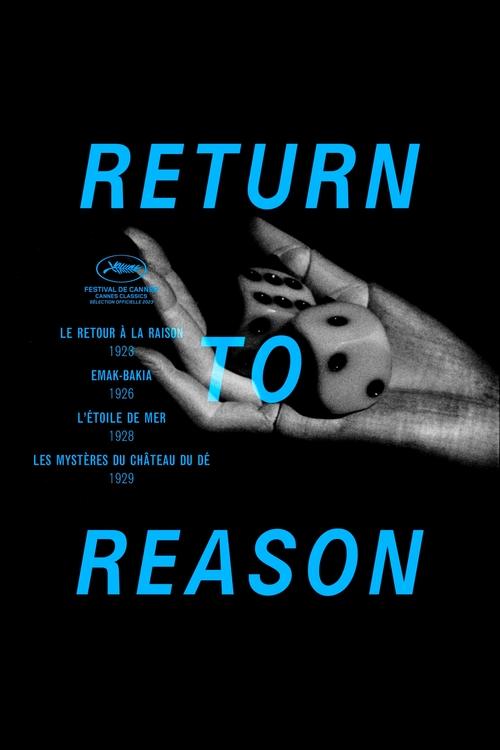
An immersion into the surreal and dreamlike world of painter, photographer and filmmaker Man Ray (1890-1976), one of the most prolific American visual artists, through four of his short films, brought to life by the atmospheric music of SQÜRL.
2018
2024
2002
2016

2014

1974

2010
1974
No reviews yet. Be the first to share your thoughts on this movie!
Use the rating form above to leave a star rating and optional review.