24 Frames
2018
No user ratings available yet
Diversity score: 5.7 out of 10
2014
Director
Aleksandr Mitta
Runtime
119 minutes
Average Rating
No ratings yetSynopsis
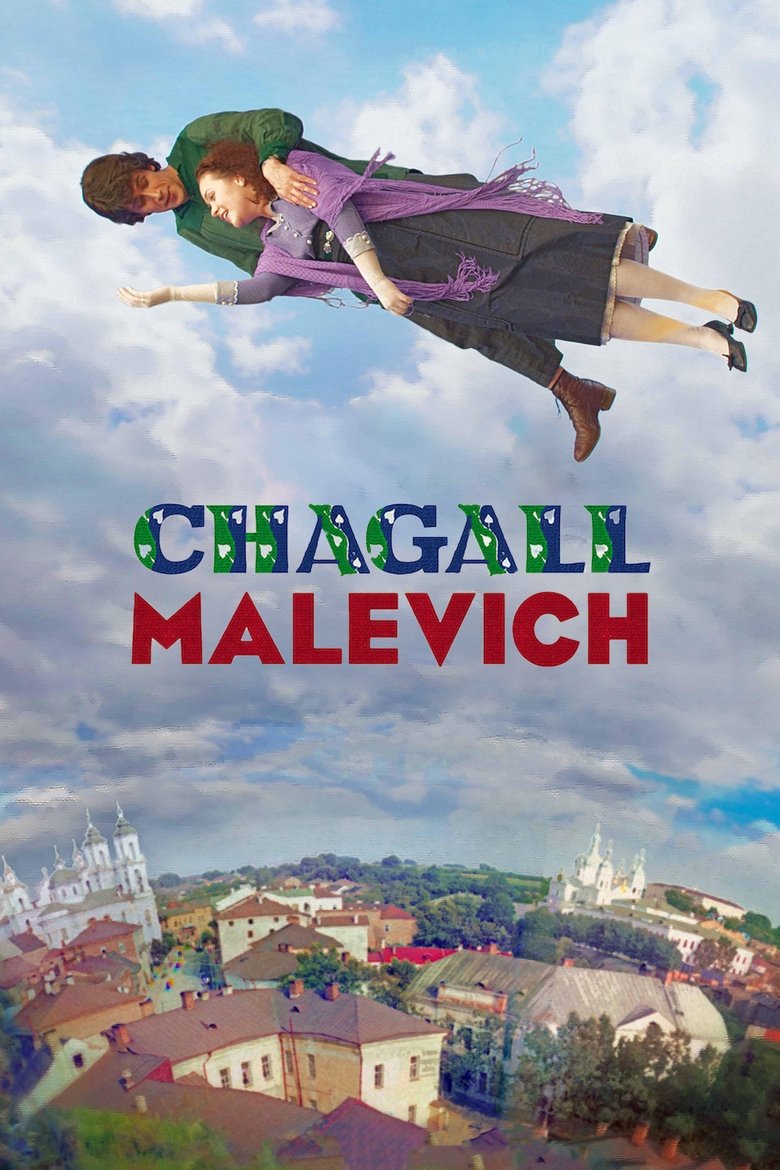
The film is an attempt to recreate the world of Marc Chagall and his myth within the genre of a folklore ballad. We are not exploiting Chagall's images, but are attempting to create a dramatized projection of his creativity onto the movie screen, relying on both, facts and fantasy (as Chagall himself would).The story is based on real events which occurred at the time of Chagall's short-lived period in Vitebskin in 1917-18, during which time he creates the Academy of Modern Art, inspired by his dreams of a bright and beautiful future. Many pictures by Chagall and Malevich are used in the film.
Overall Score
Fair
Category Breakdown
LGBTQ+ Representation
The film explores intense, boundary-blurring emotional and intellectual connections between artists. While it leans into myth and fantasy, specific depictions of non-cisnormative identities are not explicitly detailed in the primary narrative.
Gender Representation
The story focuses on the male-dominated sphere of the early 20th-century avant-garde. However, it disrupts traditional hierarchies by centering the artists' intellect and vision as the primary drivers of reality.
Racial & Ethnic Diversity
Set in Vitebsk, the film captures a period of significant ethnic fluidity. By centering Chagall's Jewish heritage, it avoids a homogeneous Western norm and presents a multi-ethnic historical landscape.
Religious & Cultural Diversity
The narrative embraces subjective morality and prioritizes fantasy over rigid, institutionalized truth. It explores the tension between individual expression and the systemic upheavals of the 1917 revolution.
Disability Representation
There is no evidence to suggest that neurodivergence or physical disability are central themes or utilized as primary character drivers in this work.
Strengths
Areas for Improvement
AI Analysis
Chagall–Malevich functions as a folklore ballad that prioritizes surrealist fantasy over linear biography. By utilizing a dream-like logic, the film moves away from traditional historical realism to focus on the internal creative worlds of its subjects. The film achieves meaningful representation by centering a non-Western, multi-ethnic perspective. It avoids the standard Western lens by grounding the story in the specific cultural milieu of the Eastern European avant-garde and Chagall's Jewish heritage. While the film does not explicitly center modern identity politics, its narrative architecture disrupts conventional expectations. It favors a fluid view of human creativity and cultural identity over rigid, institutionalized historical structures.
2018

1973

2012
2013
2010
1987
2011
2013
2001

2017
1972
2019
No reviews yet. Be the first to share your thoughts on this movie!
Use the rating form above to leave a star rating and optional review.