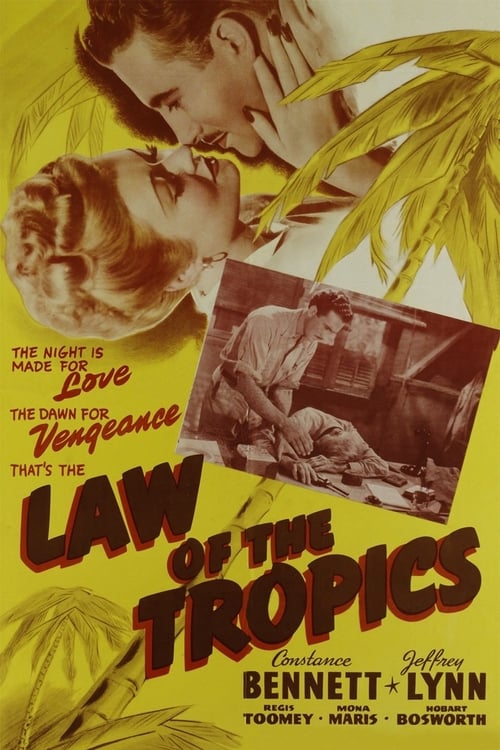
Law of the Tropics
1941
No user ratings available yet
Diversity score: 2.7 out of 10

1942
NRDirector
Richard Oswald
Runtime
67 minutes
Average Rating
No ratings yetSynopsis
A young woman receives an invitation from the Governor of an island prison to spend a week with him. She does so, but conceals the fact that her husband is being held as a convict on the island.
Overall Score
Limited
Category Breakdown
LGBTQ+ Representation
The film focuses on a heterosexual marital dynamic and a relationship between a woman and a male Governor. There is no indication of non-cisnormative identities or narratives that critique heteronormativity.
Gender Representation
A female protagonist exercises agency through deception, yet this agency remains tethered to traditional domestic concerns. The power dynamic follows conventional structures where the male Governor holds institutional authority.
Racial & Ethnic Diversity
The island prison setting implies a colonial context, but the narrative lacks evidence of a diverse cast. Without specific details on the convict population, it appears to follow homogeneous casting standards.
Religious & Cultural Diversity
Themes of marriage and institutional authority align with traditional Western dramatic tropes. The story does not present an anti-institutional critique or suggest significant moral relativism.
Disability Representation
There is no mention of characters with physical, sensory, or neurodivergent traits within the narrative.
Strengths
Areas for Improvement
AI Analysis
Isle of Missing Men operates as a standard mid-century melodrama, prioritizing situational irony and domestic tension over social subversion. The plot centers on a woman navigating a deception involving her husband and a colonial authority figure, reinforcing the era's traditional social hierarchies. The film lacks intersectional complexity, focusing instead on conventional romantic-drama tropes. While the female lead possesses agency, it is confined to preserving her marriage, leaving systemic power structures unchallenged. Ultimately, the production reflects the homogeneous casting and narrative constraints of 1942, offering little in the way of progressive representation or cultural critique.
1941
1947

2008

1963

1936

1938
1922

2007
1931
1919
1939
1934
No reviews yet. Be the first to share your thoughts on this movie!
Use the rating form above to leave a star rating and optional review.