Isle of Missing Men
1942
No user ratings available yet
Representation score: 0.8 out of 10
Representation Score
Minimal
1941
ApprovedDirector
Ray Enright
Runtime
76 minutes
Average Rating
No ratings yetNew Showbiz Analysis
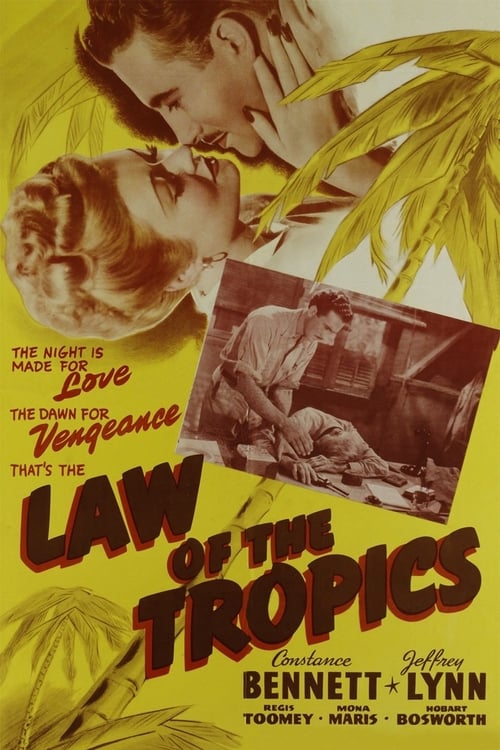
Law of the Tropics is a conventional 1941 studio melodrama built on classic clichés of deception and romantic displacement. The plot uses a fugitive motif to drive character intimacy, focusing on individual roles rather than social critique. The film maintains a Western-centric perspective, treating the South American setting as a stage for American interpersonal drama. This approach prioritizes traditional romantic structures over any meaningful exploration of the local culture or diverse populations. While the female lead participates in the central scheme, the narrative does not challenge established gender hierarchies or systemic social structures.
Category Breakdown
The film focuses on a traditional romantic storyline. There are no representations of LGBTQ+ identities or same-sex relationships.
Joan Madison plays a significant role by agreeing to a dangerous deception. However, her role is defined by her relationship to the male lead and her status as a fugitive.
The South American setting mainly serves as a backdrop for American characters. The story does not explore diverse ethnic identities or local representation.
The plot centers on personal melodrama and individual romantic resolution. It avoids any critique of Western institutions or the impact of colonial history.
The narrative does not include any characters with visible or invisible disabilities.
Present on Screen
Limited or Absent
Official Synopsis
Jim Conway, who works on a South American rubber plantation, leaves to meet a girl from the United States whom he is to marry. But he receives a telegram from her telling him she has married someone else. He goes to a waterfront café where he meets a singer, Joan Madison, and tells her his troubles. He asks her to marry him and return to the plantation with him using the name of the girl he was to marry. This strikes her as a great idea as she is a wanted fugitive.
1942

1937

1932

1930

1939

1945
1948

1946
No reviews yet. Be the first to share your thoughts on this movie!
Use the rating form above to leave a star rating and optional review.