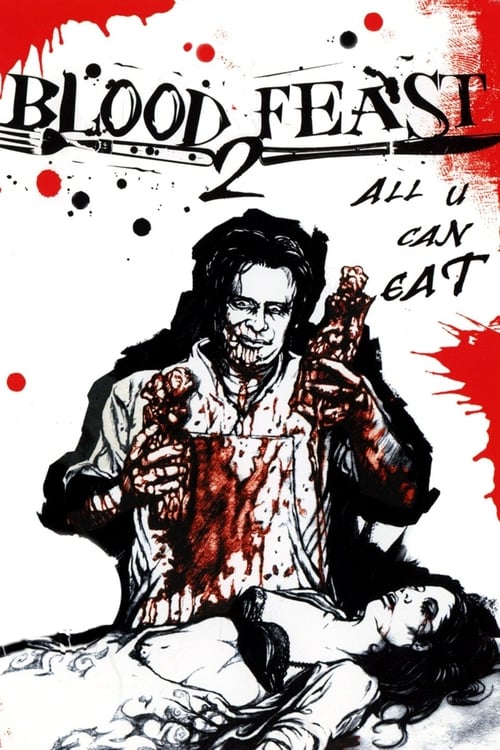
Blood Feast 2: All U Can Eat
2002
No user ratings available yet
Representation score: 0.7 out of 10
Representation Score
Minimal
1963
Not RatedDirector
Herschell Gordon Lewis
Runtime
67 minutes
Average Rating
No ratings yetNew Showbiz Analysis
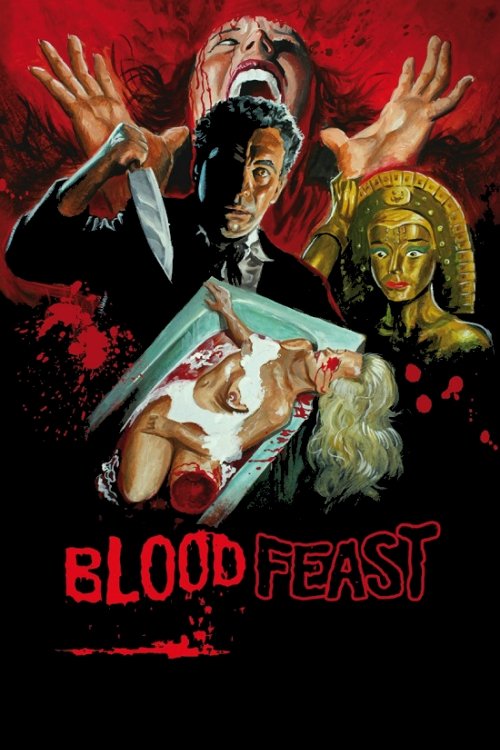
Blood Feast focuses on visceral, anatomical spectacle rather than complex social or identity-based storytelling. While it breaks the conventional norms of its time through graphic violence, it fails to engage with modern social frameworks or diverse representation. The film relies heavily on traditional predator-prey clichés. Although it includes an Egyptian immigrant protagonist, this character is portrayed through sensationalist clichés rather than nuanced representation. Overall, Blood Feast serves as a foundational splatter film that lacks the depth needed to challenge systemic hierarchies or offer meaningful representation for underrepresented groups.
Category Breakdown
The film follows a traditional framework that assumes everyone is straight or cisgender. There are no LGBTQ+ characters or non-straight relationships featured.
Women are portrayed primarily as passive victims of extreme violence. The story is driven by a male antagonist, and women play a minor role in advancing the plot.
Fuad Ramses, an Egyptian immigrant, adds diversity to the cast. However, his character is portrayed through an exoticized lens, fitting the stereotype of an outsider.
Non-Western religious elements, such as the goddess Ishtar, are used as a backdrop for violent rituals. These cultural references are sensationalized rather than explored in depth.
The film does not include characters with visible or invisible disabilities. Any physical trauma shown is a result of violence, not disability.
Present on Screen
Limited or Absent
Official Synopsis
In the sleepy suburbs of Miami, seemingly normal Egyptian immigrant Fuad Ramses runs a successful catering business. He also murders young women and plans to use their body parts to revive the goddess Ishtar. The insane Ramses hypnotizes a socialite in order to land a job catering a party for her debutante daughter, Suzette Fremont, and turns the event into an evening of gruesome deaths, bloody dismemberment and ritual sacrifice.
2002
1966

1987

1974
1973

2014

1976

2011
No reviews yet. Be the first to share your thoughts on this movie!
Use the rating form above to leave a star rating and optional review.