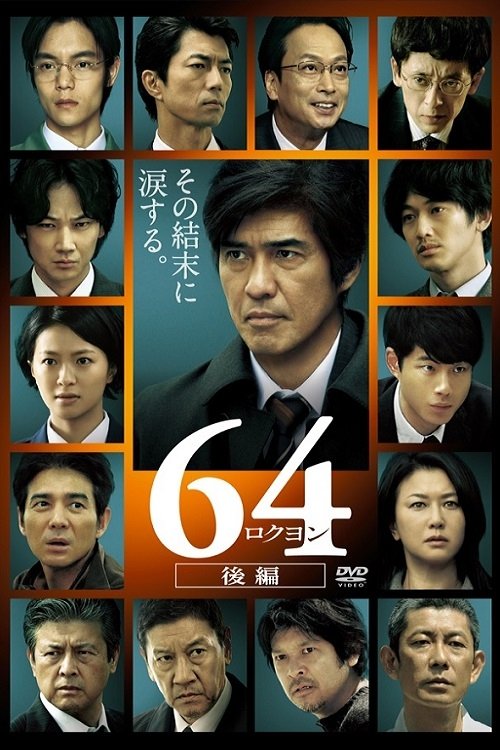
64: Part 2
2016
No user ratings available yet
Diversity score: 4.8 out of 10
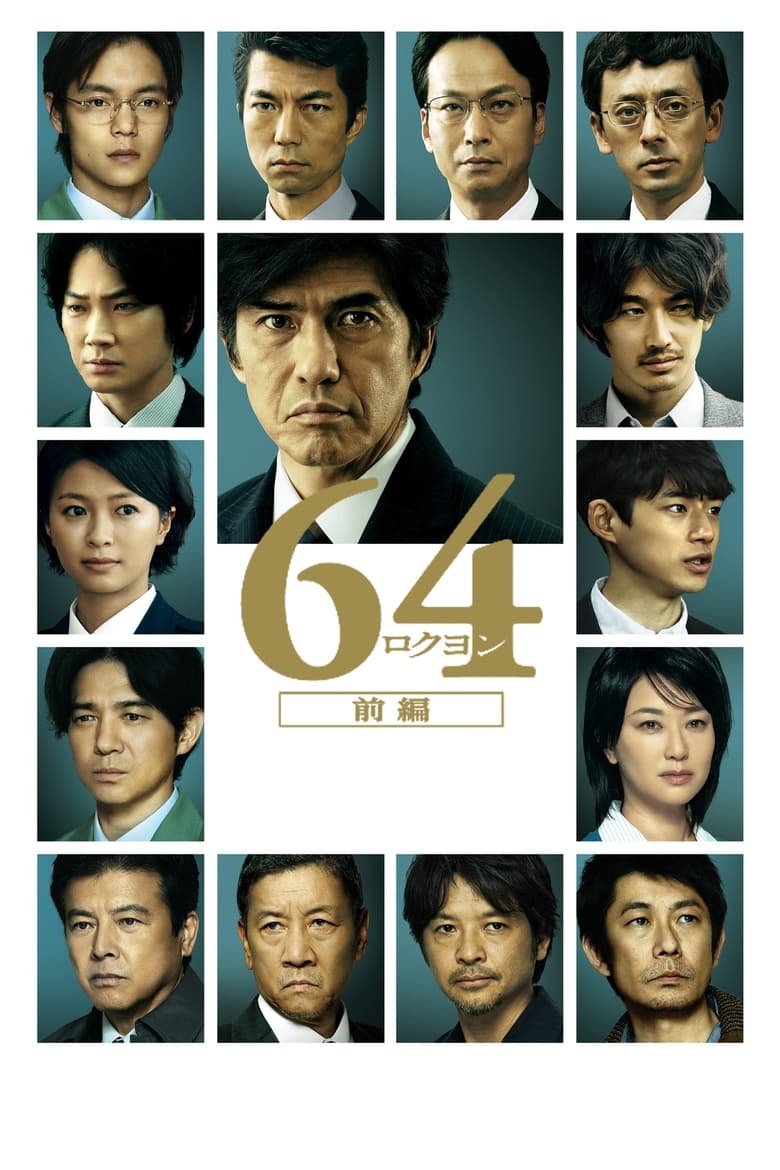
2016
Director
Takahisa Zeze
Runtime
121 minutes
Average Rating
No ratings yetSynopsis
1989: 64th and last year of the Showa era. A girl is kidnapped and killed. The unsolved case is called Case 64 ('rokuyon'). 2002: Yoshinobu Mikami, who was the detective in charge of the Case 64, moves as a Public Relations Officer in the Police Affairs Department. His relation with the reporters is conflicted and his own daughter is missing. The statute of limitations for the Case 64 will expire in one year. Then a kidnapping case, similar to the Case 64, takes place. The rift between the criminal investigation department and police administration department deepens. Mikami challenges the case as a public relations secretary.
Overall Score
Limited
Category Breakdown
LGBTQ+ Representation
The narrative focuses on professional hierarchies and familial loss. There is no explicit evidence of LGBTQ+ character arcs or non-heteronormative identities being central to the plot.
Gender Representation
The story centers on the male-dominated sphere of police administration. While a female victim triggers the plot, investigative agency remains primarily with male protagonists.
Racial & Ethnic Diversity
Set in 1989 and 2002, the film reflects a largely homogeneous Japanese society. The cast and setting do not utilize diverse casting to challenge the historical status quo.
Religious & Cultural Diversity
The film offers a nuanced critique of Japanese police institutionalism. It explores the friction between individual morality and the cold, procedural nature of the law.
Disability Representation
There is no specific evidence regarding the inclusion of characters with visible or invisible disabilities. The focus remains on psychological toll and professional burnout.
Strengths
Areas for Improvement
AI Analysis
64: Part 1 functions as a somber, systemic study of institutional decay. It prioritizes a critique of bureaucratic rigidity over the subversion of social identities or demographic representation. The film operates within a traditional social framework, focusing on the tension between individual agency and the inertia of large organizations. It avoids conventional heroic tropes to examine how institutional frameworks fail individuals. While the narrative lacks significant intersectional markers, it succeeds in presenting a complex view of justice and memory through its procedural lens.
2016

2007

2006
1977

2018

2018

2011
2014

2016

1963
1968
2002
No reviews yet. Be the first to share your thoughts on this movie!
Use the rating form above to leave a star rating and optional review.