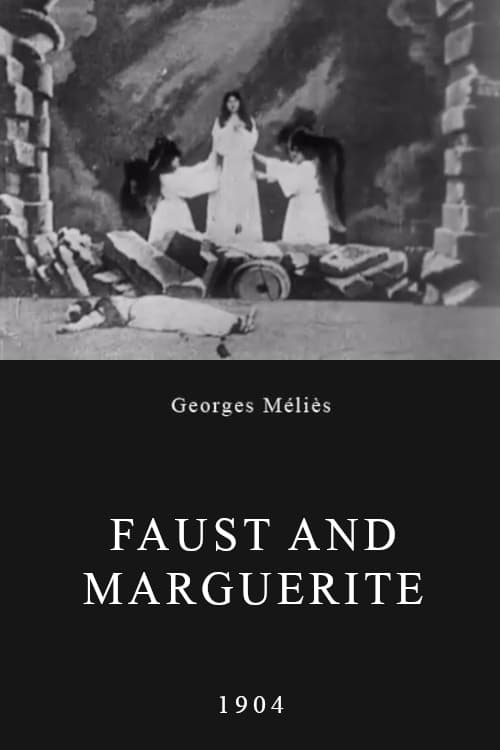
Faust and Marguerite
1904
No user ratings available yet
Representation score: 0.4 out of 10
Representation Score
Minimal
1898
Director
Georges Méliès
Runtime
7 minutes
Average Rating
No ratings yetNew Showbiz Analysis
Georges Méliès' lost film is a pioneering work of early cinema that prioritizes visual spectacle and mythological clichés over social representation. The narrative is deeply rooted in the conservative moral certainties of the late 19th century, focusing on a singular male protagonist's spiritual decline. Since the film relies on established theological legends, it lacks modern frameworks that consider multiple aspects of identity. It does not attempt to break down power dynamics or present diverse identities, serving instead as a traditional dramatic spectacle. Ultimately, the film serves as a historical artifact of its time, reflecting the homogeneous casting and rigid moral structures prevalent during the dawn of the trick film era.
Category Breakdown
The film does not include any queer narratives or non-straight identities. It focuses solely on the classic Faustian legend without addressing modern identity issues.
The story centers entirely on the male protagonist and his supernatural struggles. It follows the 19th-century structure that emphasizes male control in such conflicts.
The cast reflects the homogeneous casting practices of the era. There is no indication of racial diversity or non-Anglo-Saxon majority casts in the production.
The film upholds traditional theological morals regarding sin and divine punishment. It uses the Faustian cliché to show spiritual wrongdoing without questioning religious authority.
The film does not portray any characters with disabilities having real influence or ability to act. The focus remains on supernatural transformations rather than the lived experiences of those with disabilities.
Present on Screen
Limited or Absent
Official Synopsis
A lost film. Georges Méliès also directed a film entitled Faust aux enfers in 1903 that is frequently confused with this one, but it has little to do with the story of Faust.
1904

2000
1897
1897

1926

1925

1917
1912
No reviews yet. Be the first to share your thoughts on this movie!
Use the rating form above to leave a star rating and optional review.