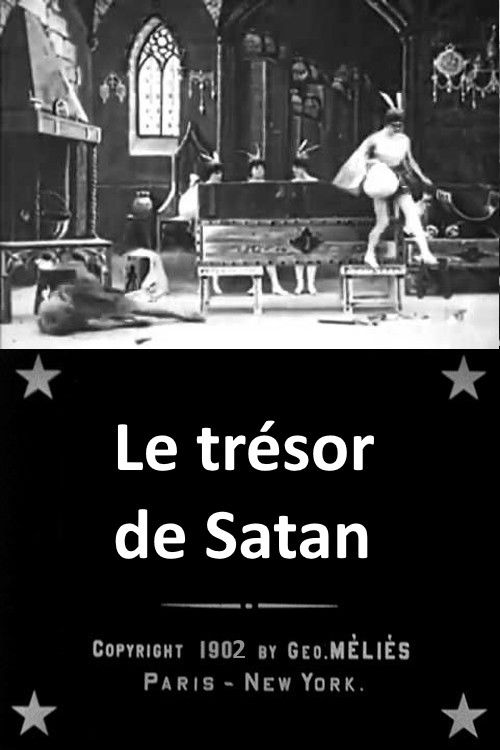
The Treasures of Satan
1902
No user ratings available yet
Diversity score: 4.1 out of 10
1897
Director
Georges Méliès
Runtime
2 minutes
Average Rating
No ratings yetSynopsis
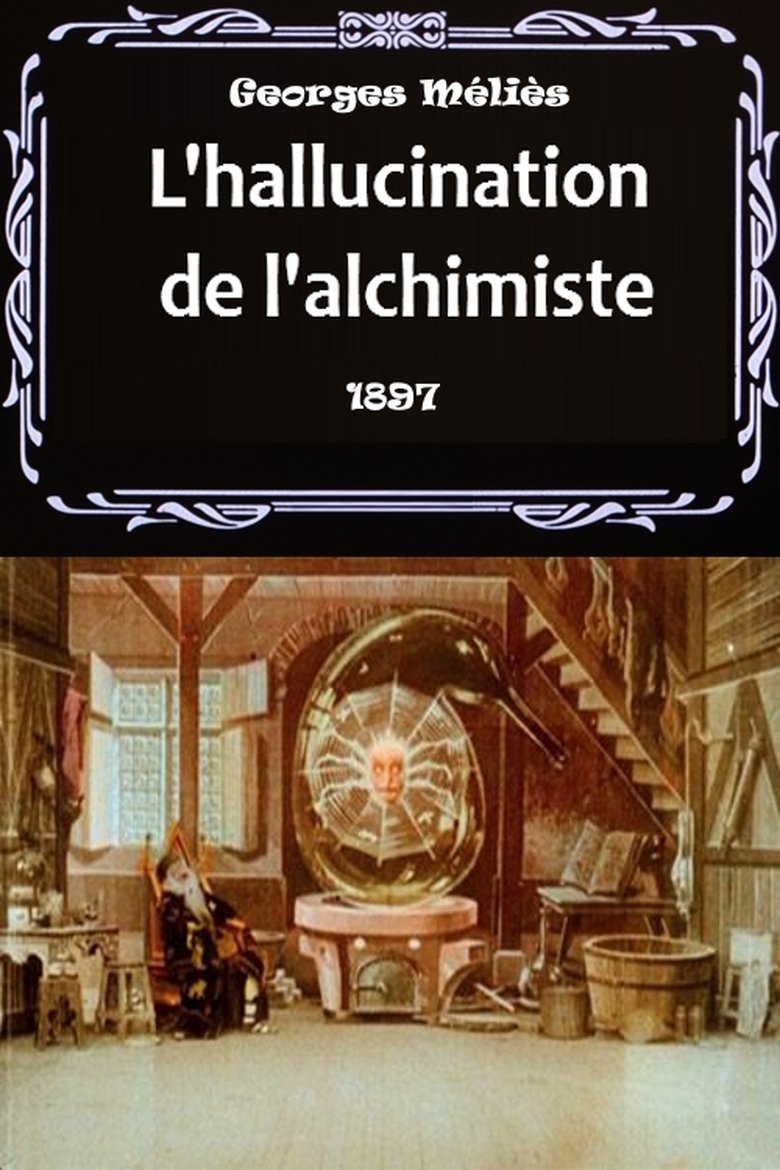
The Flicker Alley DVD "Georges Méliès: Encore New Discoveries (1896-1911)" misidentified a partial hand-colored print of the 1906 film "Alchimiste Parafaragaramus ou La cornue infernale" (The Mysterious Retort) as this film, "L'hallucination de l'alchimiste" (An Hallucinated Alchemist) from 1897, which continues to be considered a lost film.
Overall Score
Limited
Category Breakdown
LGBTQ+ Representation
The film lacks evidence of queer identities or narratives addressing heteronormativity. Its focus remains on surrealist spectacle rather than interpersonal identity politics.
Gender Representation
A star with five female heads suggests a departure from traditional, singular feminine archetypes. This fragmented portrayal disrupts conventional expectations of feminine beauty and stability.
Racial & Ethnic Diversity
There is no documented evidence of a diverse cast or race-bent casting. The work focuses on visual metamorphosis rather than ethnic representation.
Religious & Cultural Diversity
The film prioritizes subjective experience and hallucination over objective reality. Centering the narrative on an alchemist's internal state promotes a form of sensory relativism.
Disability Representation
Anatomical distortions like the giant face function as surrealist metaphors rather than depictions of lived disability. There is no evidence of neurodivergent representation.
Strengths
Areas for Improvement
AI Analysis
The film serves as a milestone in technical surrealism rather than a vehicle for intersectional representation. It utilizes early special effects to explore the boundaries of perception and the deconstruction of the human form. While the work disrupts visual hierarchies through fragmented female imagery and psychological subjectivity, it lacks contemporary frameworks for social inclusion. The narrative architecture relies on surrealist motifs rather than diverse character studies. Ultimately, the film is a study in cinematic illusion. It prioritizes the manipulation of reality and the subversion of anatomy over the representation of specific social or identity-based groups.
1902
1907
1909
1901
1898

1901

1950
1996
1998
1909
1900
1910
No reviews yet. Be the first to share your thoughts on this movie!
Use the rating form above to leave a star rating and optional review.