Affliction
1996
No user ratings available yet
Diversity score: 5.3 out of 10
1997
Director
Robert-Adrian Pejo
Runtime
112 minutes
Average Rating
No ratings yetSynopsis
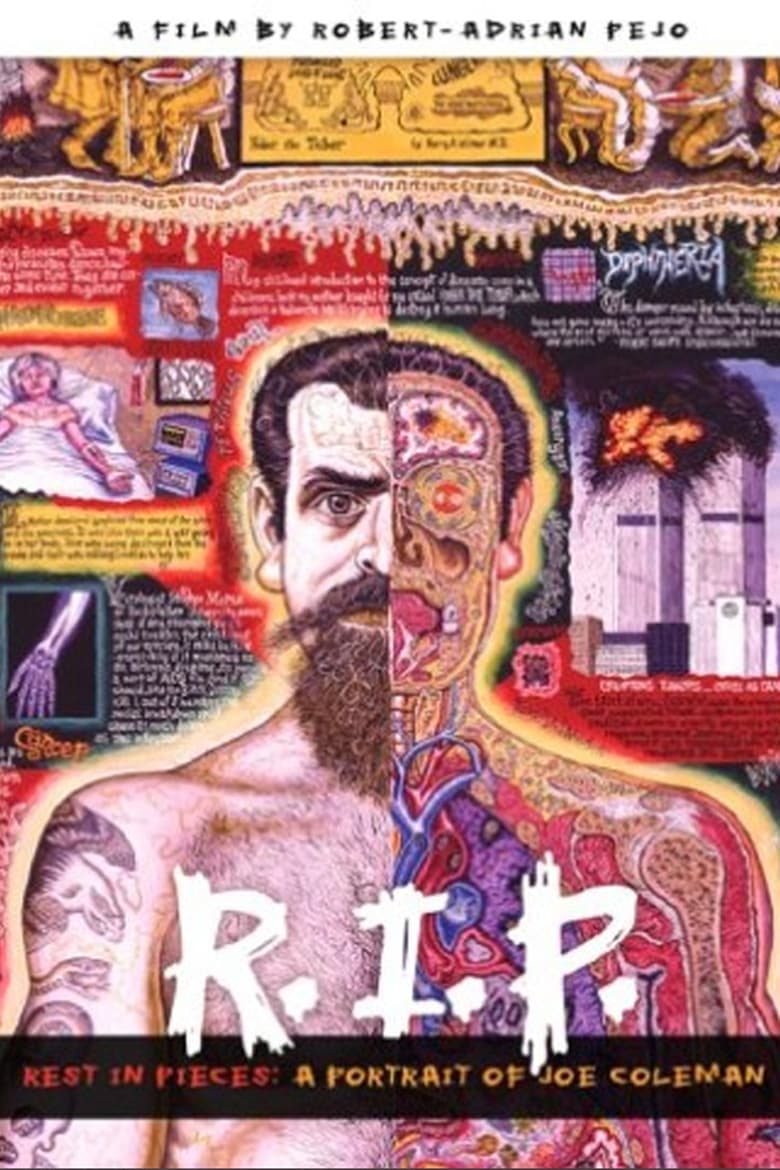
R.I.P Rest in Pieces is an intimate portrait of artist Joe Coleman, who is known around the world as a shamanic, moral voice diagnosing the ills of 21st century America. Coleman holds nothing back, telling us of a world wracked with tumorous cities, perversion, divorce, violence, atomic bombs, and a human race destroying itself simply because we are born.
Overall Score
Fair
Category Breakdown
LGBTQ+ Representation
The film explores themes of perversion and societal ills through Coleman's art. While it departs from heteronormative standards, it lacks explicit queer agency or identity-driven arcs.
Gender Representation
The documentary centers on a singular male figure, Joe Coleman. The narrative architecture prioritizes a male-centric philosophical perspective rather than subverting gender hierarchies.
Racial & Ethnic Diversity
The film adopts a nihilistic, universalist view of human destruction. It lacks specific ethnic narratives, focusing instead on a macro-societal critique of the human race.
Religious & Cultural Diversity
The film offers a profound critique of Western stability and progress. It positions the subject as a shamanic voice diagnosing a self-destructive, modern civilization.
Disability Representation
The work touches on the grotesque and the visceral. However, it is unclear if depictions of suffering or bodily difference grant characters agency regarding disability.
Strengths
Areas for Improvement
AI Analysis
R.I.P. Rest in Pieces is a specialized cultural critique that excels in its deconstruction of Western institutional stability. It embraces outsider morality and anti-establishment sentiments, providing a powerful counter-cultural perspective. However, the film lacks the intersectional, character-driven depth needed for high demographic scores. The focus remains on a singular male worldview and a macro-societal critique that bypasses specific ethnic or identity-based storytelling. Ultimately, the documentary functions as a philosophical portrait of an artist rather than a diverse ensemble piece, prioritizing systemic diagnosis over demographic representation.
1996
2002

2017
1978

2004

2012
2012

2014

2021

2011

2008

1999
No reviews yet. Be the first to share your thoughts on this movie!
Use the rating form above to leave a star rating and optional review.