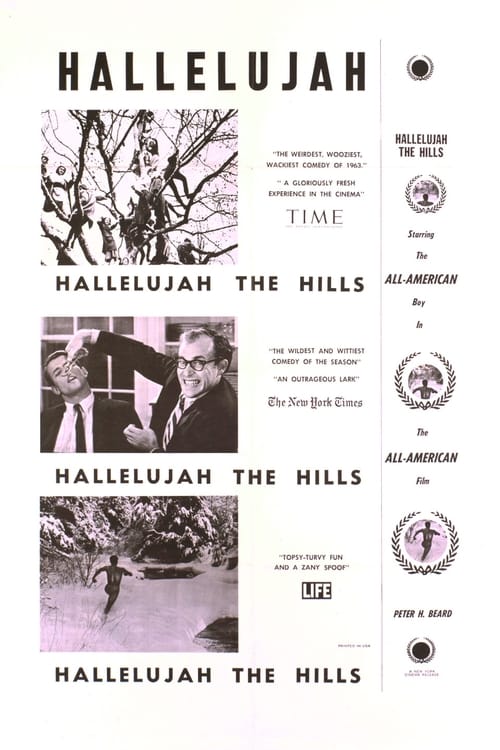
Hallelujah the Hills
1963
No user ratings available yet
Diversity score: 3.8 out of 10

1963
Director
Manuel Summers
Runtime
87 minutes
Average Rating
No ratings yetSynopsis
The story of two loves: a young boy that fall sin love with a girl of his school, but she is more mature and finally forgets him; and the story of a man and a woman that live in an hospital for old people and can't see each other.
Overall Score
Fair
Category Breakdown
LGBTQ+ Representation
The film lacks explicit confirmation of non-cisnormative identities or same-sex intimacy. The narrative focuses on the heterosexual romantic pursuits of the adolescent and elderly protagonists.
Gender Representation
Margarita exercises autonomy by actively choosing her romantic interests rather than remaining passive. Josefa also challenges traditional tropes by pursuing a life-altering goal of marriage and escape.
Racial & Ethnic Diversity
The production reflects the demographic homogeneity typical of 1963 Spain. There is no evidence of a non-white majority or intentional racial diversity within the cast.
Religious & Cultural Diversity
The story critiques traditional institutions by portraying the retirement home as a space to escape for personal fulfillment. It prioritizes individual agency over strict social decorum.
Disability Representation
The film touches on the social management of the elderly through the retirement home setting. However, there is no explicit focus on neurodivergence or physical disability.
Strengths
Areas for Improvement
AI Analysis
The film utilizes a dual-narrative structure to explore desire and autonomy across different life stages. By centering the agency of both children and the elderly, it disrupts conventional age-based social hierarchies. While the film lacks intersectional breadth, it succeeds in granting significant agency to characters traditionally marginalized by social structures. The pursuit of companionship serves as the primary driver for both the adolescent and elderly protagonists. Ultimately, the work functions as a character-driven study of autonomy, even if it remains limited by the demographic and social norms of its era.
1963
1978

2016

1980

1964
1957

1974

1965
1969

1960
1984

1957
No reviews yet. Be the first to share your thoughts on this movie!
Use the rating form above to leave a star rating and optional review.