Dante Dreamer
1958
No user ratings available yet
Diversity score: 1.5 out of 10
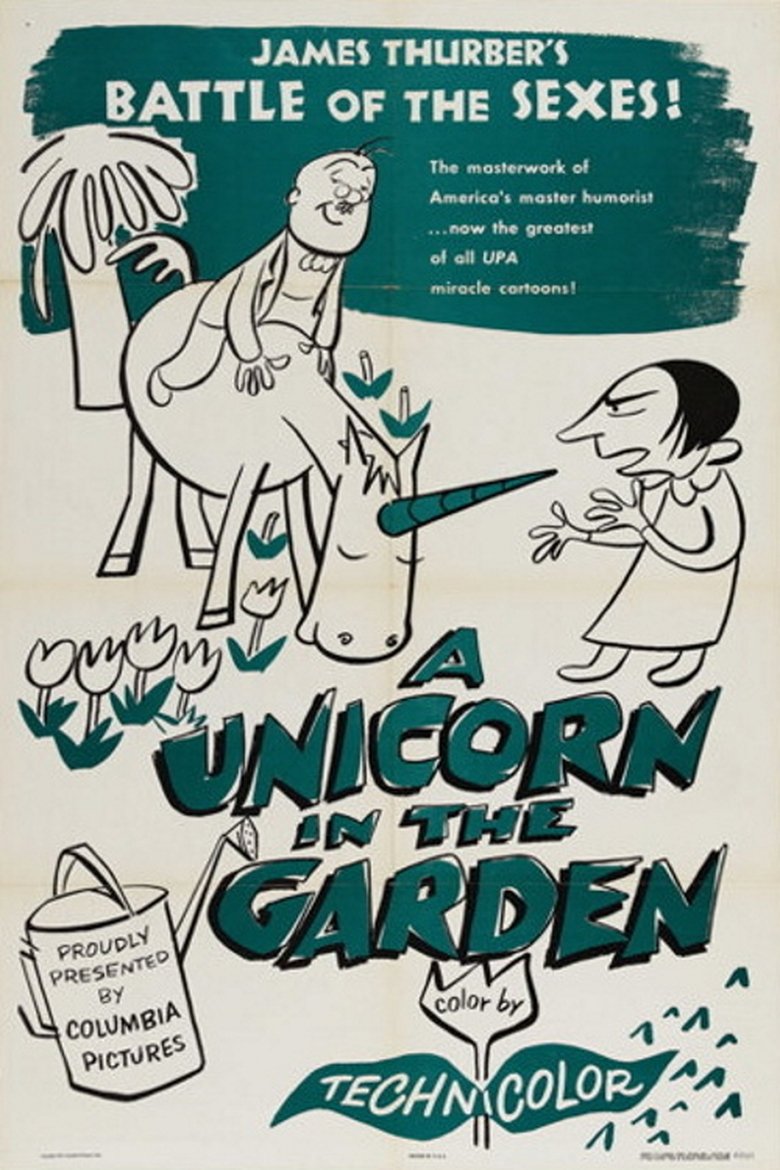
1953
Director
William T. Hurtz
Runtime
7 minutes
Average Rating
No ratings yetSynopsis
Based on James Thurber's short-story about a mild, henpecked man who, while preparing his breakfast, looks out the window and sees a unicorn eating flowers in the garden. He rushes upstairs to inform his domineering wife, and she accuses him of being crazy and threatens to have him put away. He persists that he did see a unicorn in the garden, and she phones for the authorities to come take him away. But when they arrive, with strait-jackets, they find the wife rambling and raving about seeing the unicorn, and promptly take her away.
Overall Score
Limited
Category Breakdown
LGBTQ+ Representation
The film centers on a traditional heteronormative marriage. There is no evidence of non-cisnormative identities or critiques of heteronormativity present in the narrative.
Gender Representation
The story subverts mid-century tropes by portraying the husband as vulnerable and the wife as dominant. This role reversal challenges conventional depictions of gendered stability and domestic hierarchy.
Racial & Ethnic Diversity
The characters and setting reflect a homogeneous social environment. No evidence of racial or ethnic diversity is present in the work.
Religious & Cultural Diversity
The film critiques the reliability of Western institutional judgment through its depiction of authority. It presents the domestic sphere as a site of conflict rather than a sanctuary.
Disability Representation
Mental health and neurodivergence are explored through the lens of madness and straitjackets. These elements function primarily as plot devices for irony rather than nuanced character studies.
Strengths
Areas for Improvement
AI Analysis
The film offers a cynical departure from the mid-century ideal of the stable, patriarchal household. It finds its progressive value in disrupting domestic hierarchies and questioning the accuracy of institutional authority. However, the work remains limited by its lack of meaningful representation regarding race, ethnicity, or LGBTQ+ identities. The narrative relies on a homogeneous social setting typical of its era. Ultimately, the film's impact is found in its subversion of power dynamics rather than its inclusivity. It uses themes of perceived reality and madness to drive its ironic conclusion.
1958

2003
1944
1932
1990

1974
1949
1986
1975
1934
1949
1958
No reviews yet. Be the first to share your thoughts on this movie!
Use the rating form above to leave a star rating and optional review.