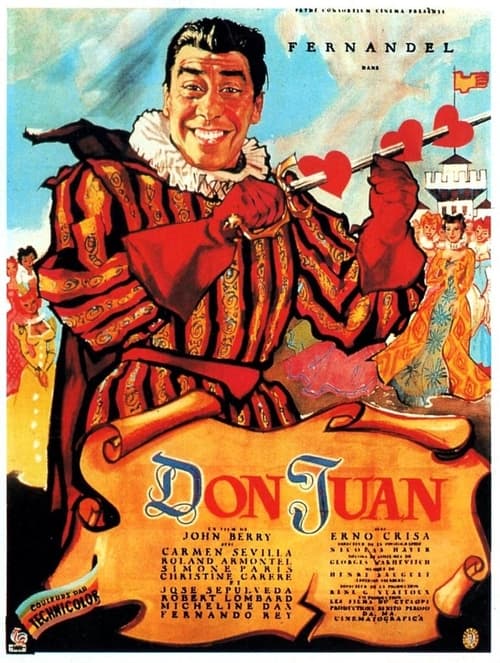
Don Juan
1956
No user ratings available yet
Representation score: 0.6 out of 10
Representation Score
Minimal
1961
Director
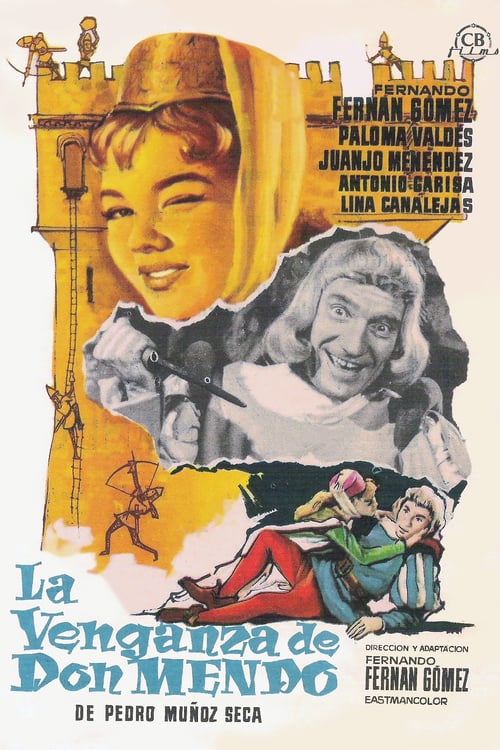
Fernando Fernán Gómez
Runtime
87 minutes
Average Rating
No ratings yetNew Showbiz Analysis
La venganza de Don Mendo preserves historical norms rather than critiquing them. The film's structure is designed to uphold the social and moral hierarchies of medieval Castilian nobility. The narrative centers on restoring personal honor within a rigid class system. It uses a comedic framework to navigate established social obligations and traditional gender roles. Overall, the film lacks representation that reflects multiple aspects of identity. It remains a localized study of aristocratic honor, adhering to the cultural norms of its time.
Category Breakdown
The film adheres to traditional chivalric codes and focuses on heterosexual courtship. It does not include any non-binary gender identities or narratives that question conventional romantic structures.
Magdalena mainly serves as an object of desire within a patriarchal society. Her role is limited by her father's decisions and the pursuit of masculine honor.
The cast is ethnically uniform, reflecting the film's 1961 production context. The story centers solely on the Spanish aristocracy without incorporating diverse ethnic viewpoints.
The narrative celebrates traditional Spanish identity and aristocratic heritage. It upholds social standing and reputation within a rigid, culturally specific class system.
There are no visible or invisible disabilities that play a central role in the character arcs or the overall narrative.
Present on Screen
Limited or Absent
Official Synopsis
Don Mendo, Marquess of Cabra, gallant and dashing knight of medieval Castilian, is also a virtuous mandoline player and a specialist in climbing towers. But he has a bad run, all played and all lost at seven-thirty (card game), and lost his honor playing in his latest escalation of love to the apartment of his beloved and beautiful Magdalena. Don Nuño Manso de Jarama, father of Magdalena, has pledged the hand of his daughter to the Duke of Toro, and surprises Don Mendo in the room of Magdalena. To save the honor of his beloved one, Don Mendo says that no love has led him to the Tower, but he has climbed to steal. Magdalena is clean of all suspicion, and he is condemned to die buried in the castle wall. The Marquess of Moncada and other noble gentlemen, all friends of Don Mendo, facilitate his escape.
1956
1975
1935
1971
1970
1952
1954

1936
No reviews yet. Be the first to share your thoughts on this movie!
Use the rating form above to leave a star rating and optional review.