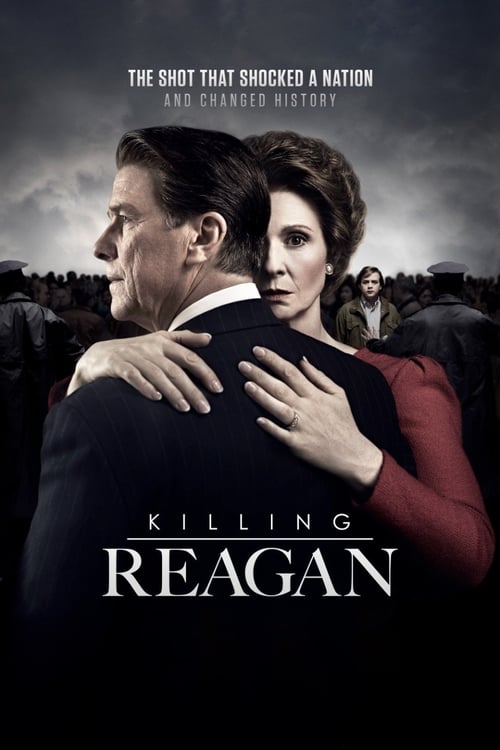
Killing Reagan
2016
No user ratings available yet
Diversity score: 3.2 out of 10

1984
NRDirector
Robert Altman
Runtime
90 minutes
Average Rating
No ratings yetSynopsis
In his New Jersey study, Richard Nixon retraces the missteps of his political career, attempting to absolve himself of responsibility for Watergate and lambasting President Gerald Ford's decision to pardon him. His monologue explores his personal life and describes his upbringing and his mother. A tape recorder, a gun and whiskey are his only companions during his entire monologue, which is tinged with the vitriol and paranoia that puzzled the public during his presidency.
Overall Score
Limited
Category Breakdown
LGBTQ+ Representation
The film centers entirely on a singular, male-dominated political sphere. There is no evidence of non-cisnormative identities or same-sex intimacy within the dialogue.
Gender Representation
The narrative operates within a restrictive patriarchal hierarchy. Female presence is relegated to the periphery or discussed only through the lens of the protagonist's personal history.
Racial & Ethnic Diversity
The cast and world depicted are overwhelmingly homogeneous. The film focuses on the insular, white-dominated corridors of power without racial intersectionality.
Religious & Cultural Diversity
The film excels in deconstructing Western institutional integrity. It portrays political truth as subjective and corrupt, disrupting conventional expectations of patriotism and stability.
Disability Representation
The protagonist's psychological instability is framed as a symptom of corruption rather than lived experience. There is no intentional representation of physical or cognitive disabilities.
Strengths
Areas for Improvement
AI Analysis
Secret Honor is a character study that prioritizes systemic critique over demographic breadth. It functions as a deconstruction of the 'Great Man' theory, using a singular, paranoid monologue to dismantle the myth of the principled statesman. While the film lacks representation across most traditional identity markers, it offers significant progressive value through its cultural subversion. It challenges the stability of Western institutions by framing power as a source of psychological fragmentation. Ultimately, the film's narrow focus on a white, male political figure results in low scores for gender, race, and LGBTQ+ diversity, even as it succeeds in its postmodern critique of power structures.
2016
2013
1967

1961
1984
1971

1977
1975
1970

2016
1971

1982
No reviews yet. Be the first to share your thoughts on this movie!
Use the rating form above to leave a star rating and optional review.