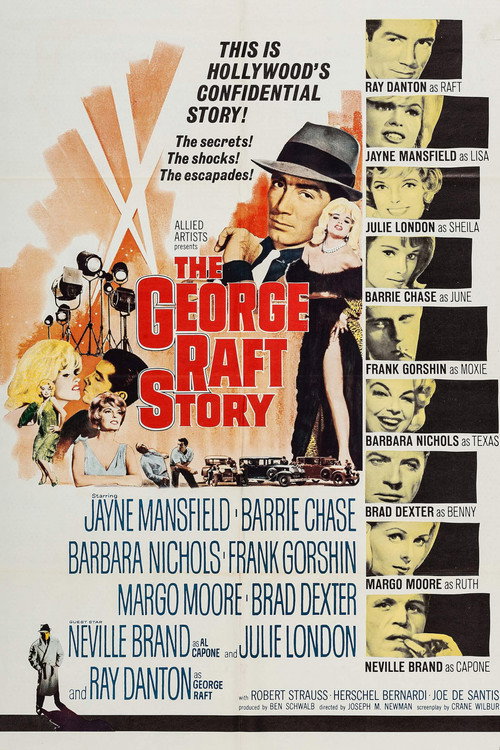
The George Raft Story
1961
No user ratings available yet
Diversity score: 3.2 out of 10

1984
Director
Wolf-Eckart Bühler
Runtime
95 minutes
Average Rating
No ratings yetSynopsis
Three actors portray scenes from the life of Sterling Hayden, with a particular focus on his appearance before the House Un-American Activities Committee. Inspired by Hayden’s memoir “Wanderer.”
Overall Score
Limited
Category Breakdown
LGBTQ+ Representation
The film lacks explicit queer narratives or non-cisnormative identities. It appears to follow a traditional biographical trajectory centered on a mid-century male figure.
Gender Representation
The narrative focuses on masculine-coded political and existential struggles. There is little evidence of female characters possessing high agency or subverting patriarchal hierarchies.
Racial & Ethnic Diversity
The story reflects the demographic homogeneity of mid-20th century America. It focuses on a white American actor without indications of a diverse ensemble.
Religious & Cultural Diversity
The film may critique state surveillance and institutional authority through Hayden's political struggles. However, it remains rooted in individualist Western values.
Disability Representation
There is no verifiable evidence regarding the portrayal of physical or neurodivergent disabilities in this work.
Strengths
Areas for Improvement
AI Analysis
The Shipwrecker is a traditional biographical drama that prioritizes the individualistic journey of Sterling Hayden. While the subject matter offers a critique of systemic authority and state surveillance, the film lacks intersectional complexity. The narrative structure is heavily centered on masculine-coded political struggles, leaving little room for diverse perspectives. It functions primarily as a study of a singular male figure rather than a broad social tapestry. Ultimately, the film reflects the demographic homogeneity of its historical period, lacking intentional demographic disruption or a diverse ensemble.
1961

1982
1978

1977

1975

1958

2012
1965

1961
1976
1974
1958
No reviews yet. Be the first to share your thoughts on this movie!
Use the rating form above to leave a star rating and optional review.