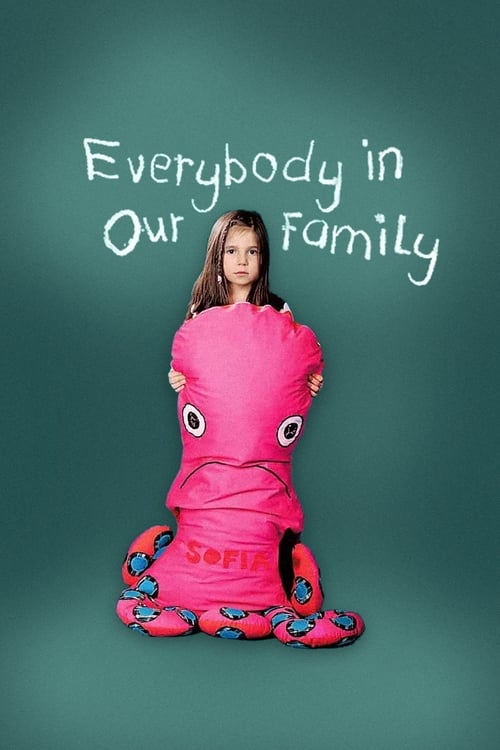
Everybody in Our Family
2012
No user ratings available yet
Diversity score: 5.7 out of 10

2000
Director
Alberto Seixas Santos
Runtime
85 minutes
Average Rating
No ratings yetSynopsis
Concerns an Irish woman, Cathy (Pauline Cadell), who dearly loves her Portuguese lawyer husband, Pedro (Rui Morisson); however, unbeknownst to her, he engages in one tryst after another. Cathy soon finds herself trying to help a young delinquent get off heroin, while the youth's desperate mother joins a weird religious cult. In other segments, an elderly man is nearly driven mad with grief at the loss of his granddaughter in a train station, while a down-and-out jeweler ushers the young girl to a hotel room.
Overall Score
Fair
Category Breakdown
LGBTQ+ Representation
The narrative focuses on the infidelity within a heterosexual marriage. There is no explicit evidence of queer-coded subtext or non-cisnormative identities present.
Gender Representation
Women serve as central drivers of the emotional arcs, particularly through Cathy's proactive efforts to help a delinquent. The film avoids passive tropes by exploring female psychological complexity.
Racial & Ethnic Diversity
The film offers an internationalist perspective by blending Irish and Portuguese identities. However, the cast appears to reflect a primarily European demographic.
Religious & Cultural Diversity
The story critiques traditional Western institutions, portraying religious cults as potentially predatory. It embraces moral relativism rather than relying on archetypal heroes or villains.
Disability Representation
Addiction and mental anguish are treated as profound human conditions. These elements drive the tragic momentum rather than serving as specific studies of neurodivergence.
Strengths
Areas for Improvement
AI Analysis
Alberto Seixas Santos's *Mal* is a fragmented study of human frailty that prioritizes thematic depth over traditional hero narratives. It succeeds in deconstructing social hierarchies and questioning the stability of the family unit and religious institutions. While the film lacks high scores in explicit demographic diversity, its progressive narrative profile is elevated by its commitment to moral ambiguity. It moves away from simplistic morality to examine characters caught in cycles of grief and systemic failure. However, the film remains limited by its narrow focus on European identities and its lack of representation for LGBTQ+ or diverse ethnic groups. The exploration of disability is also tied more to plot momentum than specific agency.
2012

2023

2002

1992

2022

2014

2002

2011

2014

2010

2008

2001
No reviews yet. Be the first to share your thoughts on this movie!
Use the rating form above to leave a star rating and optional review.