Toto
1933
No user ratings available yet
Representation score: 1.1 out of 10
Representation Score
Minimal
1939
Director
Christian-Jaque
Runtime
90 minutes
Average Rating
No ratings yetNew Showbiz Analysis
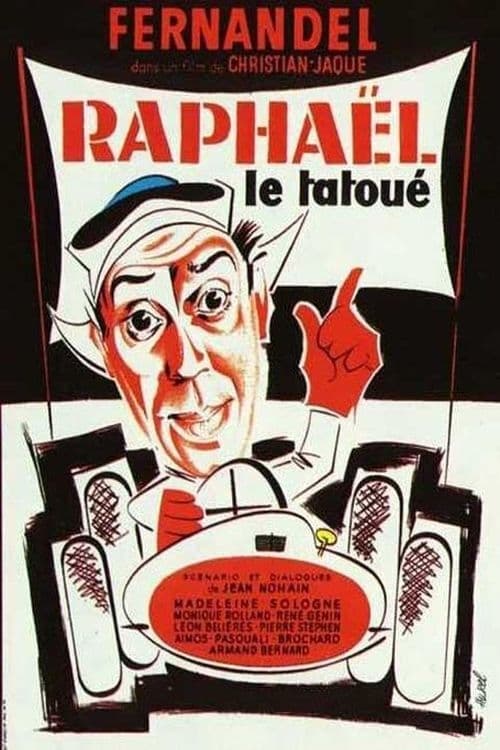
Raphaël le tatoué is a traditional period comedy that uses the 'twin' cliché to create a story of deception. The narrative centers on established social hierarchies, focusing on the friction between a working-class employee and a dominant employer. The film reflects the typical demographic composition of 1930s French cinema. It emphasizes situational humor and masculine archetypes over complex representations of diversity or challenging traditional norms. While the film examines class-based tension within an industrial setting, it fails to move beyond the traditional social frameworks of its time.
Category Breakdown
The film adheres to traditional heterosexual storylines common in 1930s comedies. There is no depiction of same-sex relationships or gender identities outside the norm.
Gender roles are traditional, with the female character primarily serving as a romantic interest. The story revolves around male characters, including the timid Modeste and the authoritative Roger Drapeau.
The cast appears homogeneous, reflecting a localized European setting. There is no indication of diverse racial or ethnic backgrounds among the characters.
The plot highlights class conflicts through situational comedy. However, it does not address Western institutions or provide cultural subversion.
There is no depiction of physical or cognitive disabilities in the film.
Present on Screen
Limited or Absent
Official Synopsis
Modeste is a timid watchman at an automobile factory which is run with an iron hand by its owner, Roger Drapeau. One evening, Modeste leaves his post to visit a fairground, where he meets the attractive Aline. Having glimpsed his employer, Modeste makes a hasty return to the factory. When Monsieur Drapeau appears, Modeste explains that it must have been his twin brother that his boss saw at the fairground, a nasty piece of work named Raphaël. Not only does Drapeau fail to see through this unconvincing lie, but it gives him an idea to win a marathon car race. Modeste and Raphaël will take alternate turns in the stages of the race and, because they are so similar, no one will be any the wiser. Unable to admit that he has no brother but afraid of losing his job, Modeste allows himself to be coerced into taking part in the race...
1933
1931

1957
1973
1943
1932
1942
1932
No reviews yet. Be the first to share your thoughts on this movie!
Use the rating form above to leave a star rating and optional review.