
My Wife's Name Is Maurice
2002
No user ratings available yet
Representation score: 2.3 out of 10
Representation Score
Limited
1973
GDirector
Gérard Oury
Runtime
100 minutes
Average Rating
No ratings yetNew Showbiz Analysis
The film uses a high-energy slapstick framework to explore the collision of disparate identities. By forcing a bigoted protagonist into a performance of Jewish religious identity, the narrative disrupts conventional social hierarchies and challenges monolithic views of culture. While the film brings ethnic and religious diversity to the forefront, it remains anchored in the social limitations of 1970s cinema. The reliance on traditional gender roles and the absence of LGBTQ+ representation prevent a higher diversity score. Ultimately, the film's strength lies in its use of mistaken identity to blend French industrialism with Arab and Jewish cultural elements, creating a narrative where diversity is the primary engine of the comedy.
Category Breakdown
The film does not include any LGBTQ+ characters or narratives. Romantic subplots focus solely on traditional marital structures and the domestic concerns of the protagonist's wife.
The story focuses heavily on the male protagonist's role. Female characters, such as the wife and daughter, play traditional supporting roles that highlight domestic stress.
The plot introduces diversity by centering the interaction between a French factory owner and an Arab rebel leader. A vibrant Jewish community is shown as a central social force.
The film explores religious identity through situational ethics and forced immersion. It critiques the protagonist's bigoted worldview by making him adopt a religious persona.
There are no significant depictions of visible or invisible disabilities. No characters with disabilities serve as central drivers for the plot or character arcs.
Present on Screen
Limited or Absent
Official Synopsis
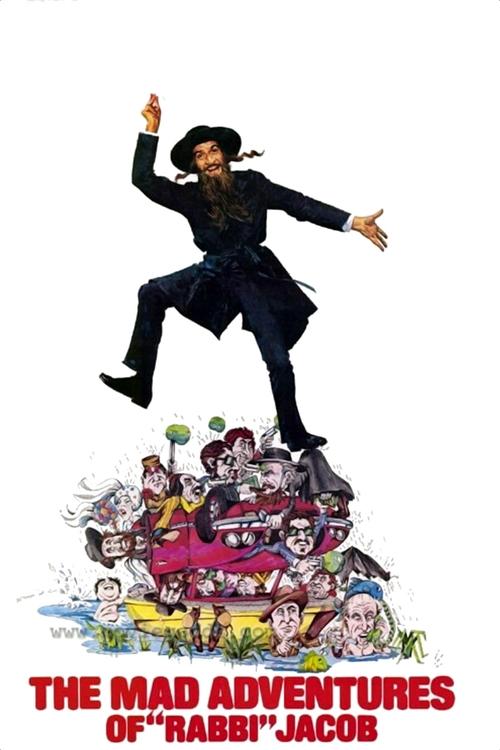
In this riot of frantic disguises and mistaken identities, Victor Pivert, a blustering, bigoted French factory owner, finds himself taken hostage by Slimane, an Arab rebel leader. The two dress up as rabbis as they try to elude not only assasins from Slimane's country, but also the police, who think Pivert is a murderer. Pivert ends up posing as Rabbi Jacob, a beloved figure who's returned to France for his first visit after 30 years in the United States. Adding to the confusion are Pivert's dentist-wife, who thinks her husband is leaving her for another woman, their daughter, who's about to get married, and a Parisian neighborhood filled with people eager to celebrate the return of Rabbi Jacob.
2002
1972

1966

1980

1984

1964

1957

1967
No reviews yet. Be the first to share your thoughts on this movie!
Use the rating form above to leave a star rating and optional review.