
The Story of Asya Klyachina, Who Loved, But Did Not Marry
1966
No user ratings available yet
Representation score: 5.9 out of 10
Representation Score
Good
1967
Director
Marlen Khutsiyev
Runtime
109 minutes
Average Rating
No ratings yetNew Showbiz Analysis
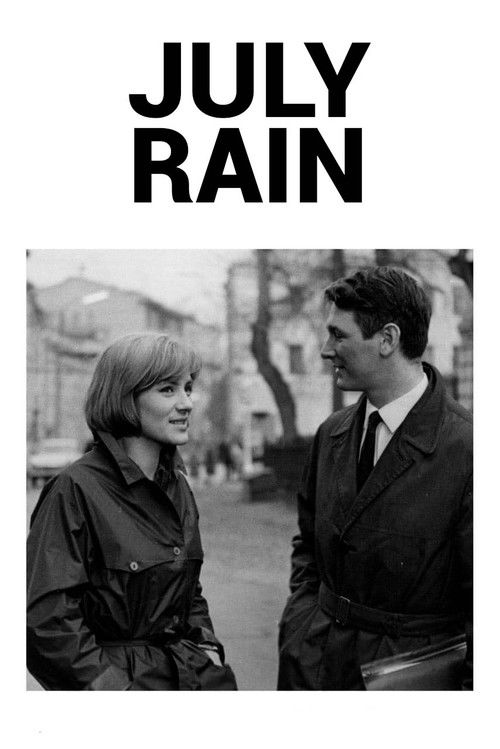
July Rain is a sophisticated exploration of humanism that centers on individual subjectivity rather than state-mandated archetypes. By focusing on the existential questions of a single woman, the film disrupts the traditional collective narratives of the time. The film stands out in its portrayal of female intellectual autonomy, moving away from domestic clichés. However, it remains constrained by the historical and regional limitations of its setting, lacking in racial and LGBTQ+ diversity. Ultimately, the work's strength lies in its subversion of authority, favoring a nuanced, individualistic perspective over the ideological demands of the collective.
Category Breakdown
The film delves into romantic intimacy and emotional depth among the Moscow intelligentsia but does not include explicit narratives that challenge heteronormativity or feature non-cisgender identities.
Lena is portrayed as an intellectually engaged protagonist who critically evaluates her social environment and romantic relationships, exercising a significant role in driving the story.
The film is set in a homogeneous urban environment typical of 1960s Soviet cities. It does not incorporate diverse casting or use non-Slavic metaphors to enrich its narrative.
Khutsiyev challenges the monolithic institutional narratives by emphasizing individual psychological truth. This approach critiques the collective heroism often imposed by state institutions.
Characters are defined by their social and psychological roles within the intelligentsia. There is no notable depiction of physical or neurodivergent disabilities.
Present on Screen
Limited or Absent
Official Synopsis
Lena, a woman in her late twenties, loves her boyfriend, but in time comes to see that their relationship serves no useful function. What's more, she sees that her friends are for the most part empty-headed lackeys, causing her to wonder just what is the point of her life.
1966

1970
1976

1972
1979
1960
1979
1980
No reviews yet. Be the first to share your thoughts on this movie!
Use the rating form above to leave a star rating and optional review.