Window
1964
No user ratings available yet
Representation score: 0.4 out of 10
Representation Score
Minimal
1967
Director
Alexander Keewatin Dewdney
Runtime
7 minutes
Average Rating
No ratings yetNew Showbiz Analysis
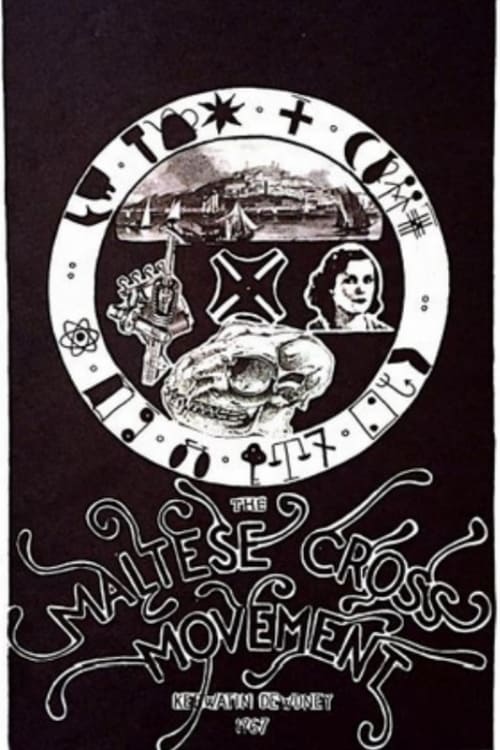
Alexander Keewatin Dewdney’s work is a structuralist meditation on the mechanics of film projection. It functions as a technical and philosophical exploration of the medium's physical constraints rather than a narrative experience. The film focuses on the 'Maltese cross' mechanism and the dialectic of movement, which results in a lack of traditional cast, dialogue, or character arcs. Without human subjects, the film does not engage with identity-based commentary or social representation. Ultimately, the low diversity score is a result of the genre. The film eschews the spectacle of human identity to study the rhythmic and mechanical essence of the cinematic apparatus.
Category Breakdown
The film focuses on the mechanical components and rhythmic movements of the projector. It does not include any characters or gendered identities, making this category inapplicable.
The work does not feature any human subjects. There are no portrayals of gendered hierarchies, as the focus is on the mechanical operation of the projector.
The film operates in a purely abstract, non-representational space. It does not use human actors or ethnic metaphors, focusing instead on light and mechanical motion.
The film prioritizes the machine over any message. Its avant-garde philosophy challenges standard Western cinematic experiences through anti-narrative structures.
There are no depictions of individuals or characters. Consequently, there is no representation of neurodivergence or physical disability within the work.
Present on Screen
Limited or Absent
Official Synopsis
The film reflects Dewdney's conviction that the projector, not the camera, is the filmmaker's true medium. The form and content of the film are shown to derive directly from the mechanical operation of the projector - specifically the maltese cross movement's animation of the disk and the cross illustrates graphically (pun intended) the projector's essential parts and movements. It also alludes to a dialectic of continuous-discontinuous movements that pervades the apparatus, from its central mechanical operation to the spectator's perception of the film's images... (His) soundtrack demonstrates that what we hear is also built out of continuous-discontinuous 'sub-sets.' Preserved by the Academy Film Archive in 2009.
1964
1929

1969

1930
1974
1984

1957
1977
No reviews yet. Be the first to share your thoughts on this movie!
Use the rating form above to leave a star rating and optional review.