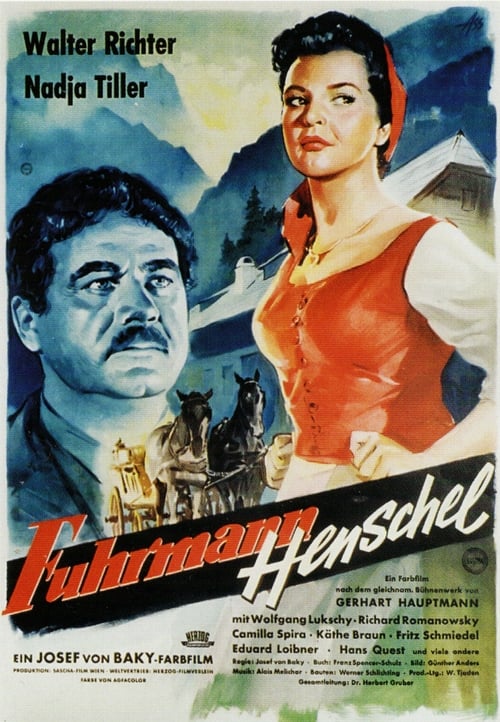
Fuhrmann Henschel
1956
No user ratings available yet
Representation score: 0.4 out of 10
No Poster Available
Representation Score
Minimal
1953
12Director
Alfred Braun
Average Rating
No ratings yetNew Showbiz Analysis
Komm zurück... is a product of its time, adhering strictly to the cinematic conventions of 1953. The film lacks intentional narrative subversion, instead mirroring the systemic constraints and social hierarchies of post-war European cinema. The lack of diversity reflects the era's demographic homogeneity and traditional moral frameworks. The narrative structure focuses on conventional values rather than challenging identity-based norms. Ultimately, the film serves as a period piece that reinforces, rather than deconstructs, the status quo of the mid-20th century.
Category Breakdown
The film does not include any characters with non-straight sexual orientations or same-sex relationships. It seems to reinforce the traditional social structures typical of 1953 German-language cinema.
The character roles likely follow the gender norms of mid-century society. There is no indication that women have superior ability to act or that the film challenges traditional masculinity.
The production reflects the demographic homogeneity of its time. The cast and narrative likely center around a homogeneous social group without any racial diversity.
The story operates within the moral frameworks common in mid-20th century. It does not appear to challenge established institutions or conventional social orders.
There is no information available regarding the portrayal of physical disabilities or neurodivergent conditions in this production.
Present on Screen
Limited or Absent
1956
1953
1945
1942
1934
1956
1958
1975
No reviews yet. Be the first to share your thoughts on this movie!
Use the rating form above to leave a star rating and optional review.