Liberation of Rome
1944
No user ratings available yet
Representation score: 0.8 out of 10
Representation Score
Minimal
1944
ApprovedDirector
Frank Capra, Hugh Stewart, John Huston, John Boulting, Roy Boulting
Runtime
75 minutes
Average Rating
No ratings yetNew Showbiz Analysis
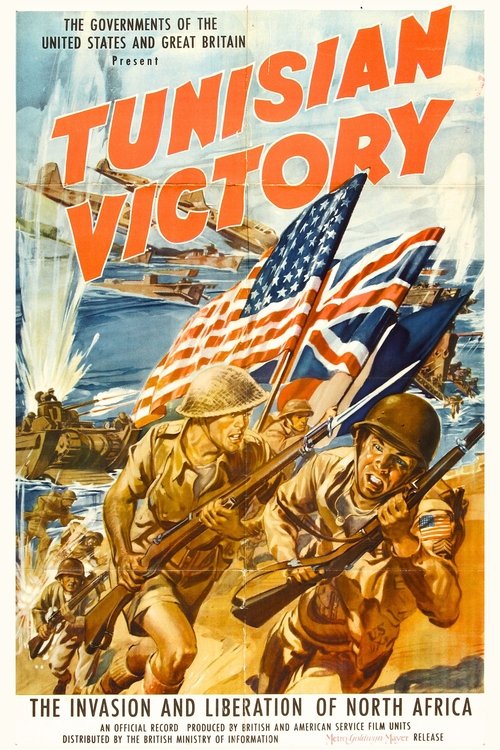
Tunisian Victory operates as a historical record of wartime mobilization rather than a narrative exploring social complexities. Produced by the U.S. Army Signal Corps, its main goal is to document tactical successes and reinforce national unity. The film upholds mid-20th-century social norms and military hierarchies, presenting a narrow perspective focused on Allied forces' movements without considering diverse viewpoints. It validates the authority of the state and the existing global order through a strictly masculine and Western lens.
Category Breakdown
The documentary contains no evidence of LGBTQ+ characters or non-assuming gender matches what was assigned at birth identities. The footage focuses strictly on the functional mechanics of mid-century military operations.
The film centers almost entirely on male soldiers and emphasizes traditional masculine roles in infantry and aviation units. Female characters and their roles are notably absent.
The footage primarily showcases a predominantly white, Anglo-Saxon military force. The North African setting is used mainly as a backdrop, with little focus on the local population.
The film serves as wartime propaganda, promoting Western patriotism and military organization to support Allied intervention and the legitimacy of Western institutions.
There are no depictions of physical disabilities, chronic illnesses, or neurodivergent experiences. The focus is solely on active combat and military operations.
Present on Screen
Limited or Absent
Official Synopsis
Documentary made by the U.S. Army Signal Corps after the North African campaign.
1944
1953
1945
1942

1945
1944
1943

1943
No reviews yet. Be the first to share your thoughts on this movie!
Use the rating form above to leave a star rating and optional review.