
Occupation
2021
No user ratings available yet
Representation score: 3.4 out of 10
Representation Score
Good
2003
Director
Miklós Jancsó
Runtime
84 minutes
Average Rating
No ratings yetNew Showbiz Analysis
Miklós Jancsó’s film excels in its complex approach to ethnic and racial identity, moving beyond nationalist clichés to highlight the shared suffering of diverse groups. By focusing on Jews and various soldiers within a cycle of forced labor, the film deconstructs traditional power dynamics. While the film is culturally sophisticated in its critique of state authority and totalitarianism, it lacks depth in gender and LGBTQ+ representation. The narrative remains largely centered on male-dominated military landscapes, with female presence appearing primarily in peripheral or concluding roles. Ultimately, the work is a powerful anti-nationalist study, prioritizing the systemic experience of underrepresented ethnic groups over the glorification of state institutions, though it offers little insight into disability or queer identities.
Category Breakdown
The film does not explicitly include LGBTQ+ characters or explore non-straight relationships. The story focuses on geopolitical and ethnic conflicts rather than on queer themes.
Women appear in roles such as a Soviet soldier, providing some systemic ability to act. However, the main focus remains on male-dominated military and prisoner roles.
The story includes a diverse cast of Jews, Hungarian, and German soldiers, highlighting shared experiences of forced labor and systemic oppression.
The film critiques totalitarianism and institutional structures using surrealism to challenge nationalist narratives and the moral binaries of occupation.
There is no information available regarding the portrayal of physical or neurodivergent disabilities in this work.
Present on Screen
Limited or Absent
Official Synopsis
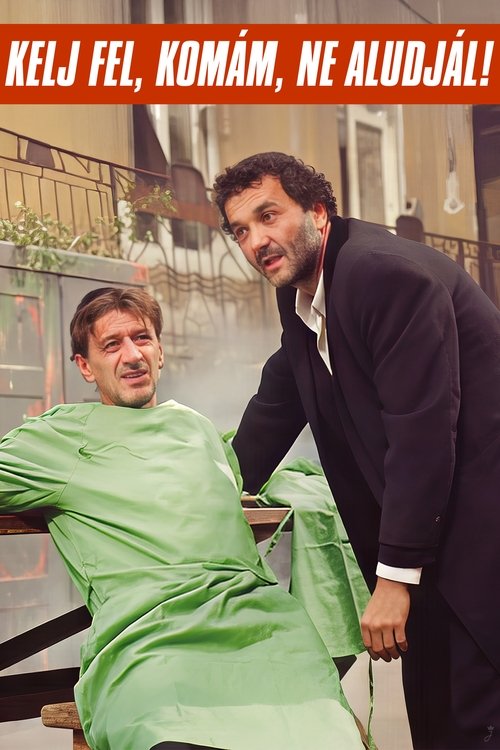
This time, Kapa and Pepe are first of all prisoners of war – and convicts taken to forced labor service, Jews, Hungarian soldiers, German soldiers. Once they are to be executed, then again they are to perform executions. The film tells in spectacular episodes about the fact that in the past more than one century and a half we kept marching from war to war; occupation and liberation turned out to be indifferent, and why couldn’t the Jews execute the SS-guys? Our heroes hover about dilapidated barracks, then again on the bridges of the capital they guess whose satellites or eternal friends for all times we might be just now. In the cupboard, among the preserved fruit bottles, Stalin is still hiding. The authors of the film are cited before court, then in a showcase hospital they are waiting for the end to come. A Soviet soldier-maid closes the film with a Péter Nádas-quote.
2021
1998
1965
2002
1986

1989

1959

1967
No reviews yet. Be the first to share your thoughts on this movie!
Use the rating form above to leave a star rating and optional review.