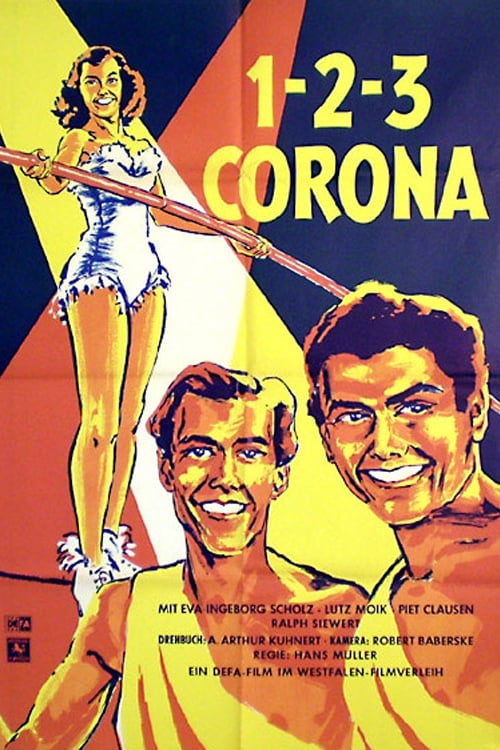
1-2-3 Corona
1948
No user ratings available yet
Representation score: 4.0 out of 10

Representation Score
Minimal
1959
Director
Wolfgang Staudte
Runtime
97 minutes
Average Rating
No ratings yetNew Showbiz Analysis
Wolfgang Staudte’s drama is a critical examination of institutional corruption rather than a study of diverse demographics. It successfully interrogates the West German legal system, exposing how power structures shield themselves from historical accountability. However, the narrative lacks depth in representing various identities. It is confined to a homogeneous, male-centric social framework that offers limited representation for women, racial minorities, or the LGBTQ+ community. Ultimately, the film’s strength lies in its intellectual deconstruction of authority, even though it remains socially narrow by modern standards.
Category Breakdown
The film does not include any LGBTQ+ characters or explore non-cisgender identities. It focuses solely on male figures and their legal and moral struggles.
The story centers around male-dominated legal spheres and power dynamics, reinforcing a patriarchal structure by focusing almost exclusively on male institutional struggles.
Set in post-war West Germany, the film depicts a homogeneous white society. It focuses on internal national issues rather than multi-ethnic dynamics.
The film effectively critiques Western institutions by revealing how judicial figures transitioned from the Nazi regime. It highlights the integrity of the state and its mechanisms.
The film does not focus on visible or invisible disabilities. There are no characters with neurodivergence or chronic illnesses as part of the main storyline.
Present on Screen
Limited or Absent
Official Synopsis
April 1945. Because he stole two bars of chocolate, the soldier Rudi is sentenced to death by the court-martial judge Dr. Schramm. Rudi manages to escape from the firing squad at the last minute, and since the end of the war has been making a meager living as a street peddler. Years later, Dr. Schramm is now a respected public prosecutor. By chance, he runs into Rudi one day on the street. Afraid that Rudi will blow the whistle on him, Dr. Schramm wants to scare him out of town. He has Rudi arrested and bullied by the police.
1948

1975

1962

1965

1960
1961

2003
1974
No reviews yet. Be the first to share your thoughts on this movie!
Use the rating form above to leave a star rating and optional review.