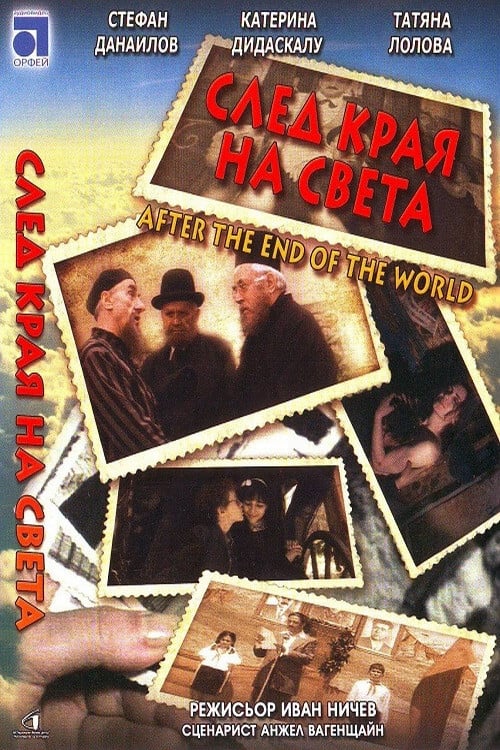
After the End of the World
1998
No user ratings available yet
Representation score: 4.7 out of 10

Representation Score
Fair
1989
Director
Juraj Jakubisko
Runtime
110 minutes
Average Rating
No ratings yetNew Showbiz Analysis
Juraj Jakubisko employs a surrealist, poetic style to deconstruct social and political stability. The film centers on a domestic unit that exists outside standard societal expectations, highlighting the tension between individual freedom and systemic control. The narrative effectively challenges mid-century gender roles and institutional frameworks. By placing a romantic sanctuary against a fanatic communist force, the film explores the tension between private life and state imposition. While the film offers a sophisticated critique of social norms, it remains rooted in the regional demographics of its era and lacks explicit representation of certain identity groups.
Category Breakdown
The film uses a surrealist lens to explore fluid expressions of desire. Though non-assuming gender matches what was assigned at birth identities are not explicitly confirmed, the unconventional romantic structure hints at potential queer subtext.
Ester stands out as a central figure in a domestic setting that challenges traditional patriarchal hierarchies. Zelmira's actions and beliefs further challenge the idea of submissive feminine roles.
The casting reflects the regional demographics of Central Europe. The film avoids idealizing homogeneous families by focusing on the transitional period after World War II.
The narrative critiques institutional power by contrasting individual autonomy with state-driven ideology. It emphasizes subjective emotional truths over rigid moral standards set by the state.
There is no documented evidence regarding the portrayal of physical or neurodivergent disabilities in this work.
Present on Screen
Limited or Absent
Official Synopsis
Pepe and Prengel, returning from war, meet Ester and both fall in love with the girl and live together in a deserted house. Fanatic communist, Zelmira, wants to turn their world upside-down.
1998

1966
1989
1980
1988
2017

2003

1974
No reviews yet. Be the first to share your thoughts on this movie!
Use the rating form above to leave a star rating and optional review.