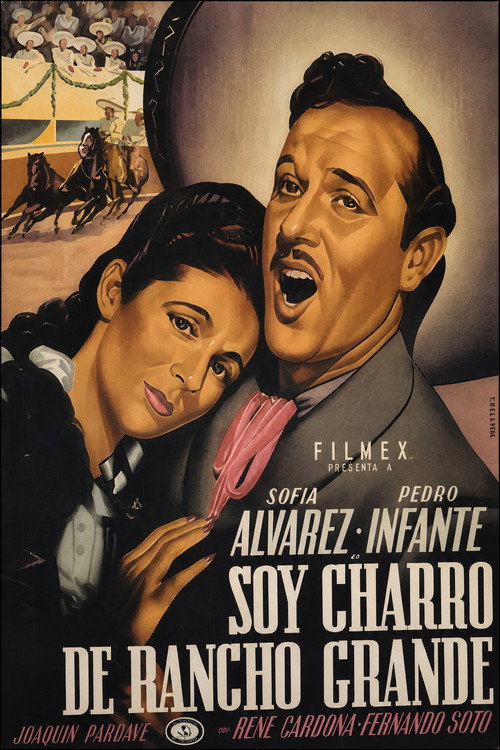
Soy charro de Rancho Grande
1947
No user ratings available yet
Representation score: 0.9 out of 10
Representation Score
Limited
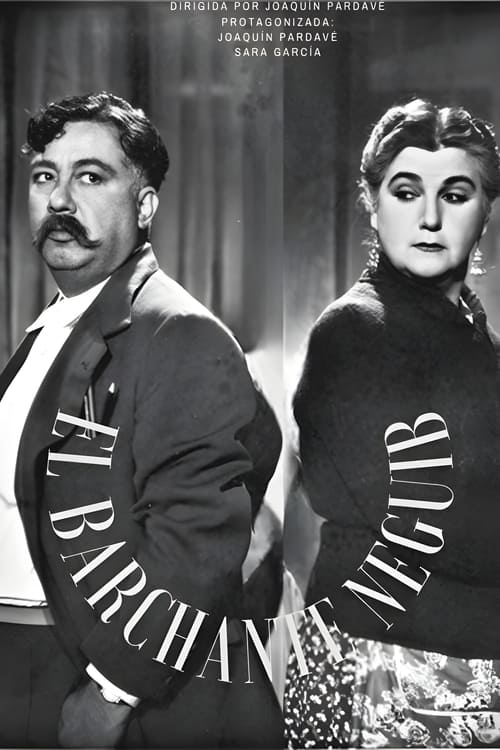
1946
Director
Joaquín Pardavé
Runtime
90 minutes
Average Rating
No ratings yetNew Showbiz Analysis
El Barchante Neguib stands out as a study of the Middle Eastern diaspora within the Mexican socio-cultural landscape. By focusing on an Arabic family's migration to Mexico City, the film explores the interplay between traditional heritage and urban modernization. The film effectively showcases ethnic diversity, breaking away from the typical narrative focus of mid-century cinema. It offers a nuanced perspective on how immigrant families integrate while preserving their unique identity within a metropolitan environment. However, the film adheres to the social norms of 1946. It retains traditional patriarchal structures and does not feature LGBTQ+ identities or characters with disabilities.
Category Breakdown
The film does not include any characters with non-straight sexual orientations or gender identities. Given the historical setting of 1946, there is no specific information about LGBTQ+ characters.
The movie focuses on a traditional patriarchal immigrant family. It examines domestic roles but upholds the gender hierarchies of the mid-1940s without challenging them.
The film highlights the Levantine/Arabic diaspora community. By featuring a non-indigenous minority group, it breaks the uniformity typically seen in mid-century films.
The story delves into the conflict between traditional values and the secular trends in Mexico City. It presents a nuanced view of how minority cultures adapt to a dominant culture.
There is no information about characters with physical or neurodevelopmental disabilities in the film.
Present on Screen
Limited or Absent
Official Synopsis
Small-town Arabic family moves to Mexico City to live with the oldest son who made his career there. Follow-up (not a direct sequel) to El baisano Jalil (1942).
1947

1954

1941

1962

2023

1948
1981
1958
No reviews yet. Be the first to share your thoughts on this movie!
Use the rating form above to leave a star rating and optional review.