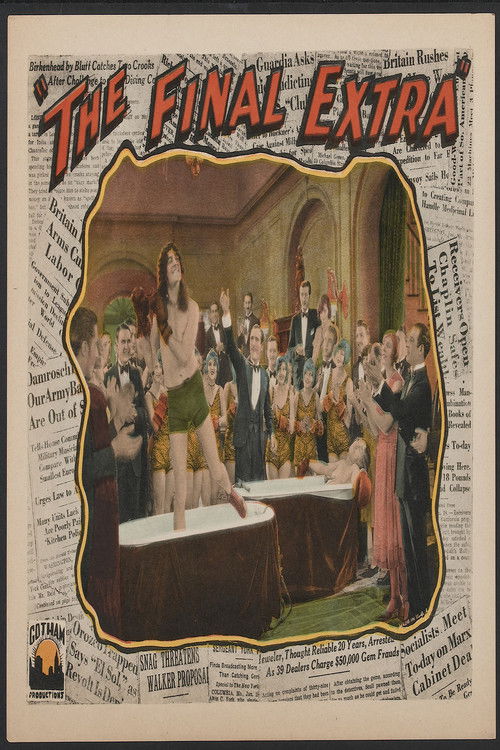
The Final Extra
1927
No user ratings available yet
Representation score: 0.6 out of 10
Representation Score
Minimal
1926
PASSEDDirector
Del Andrews
Runtime
50 minutes
Average Rating
No ratings yetNew Showbiz Analysis
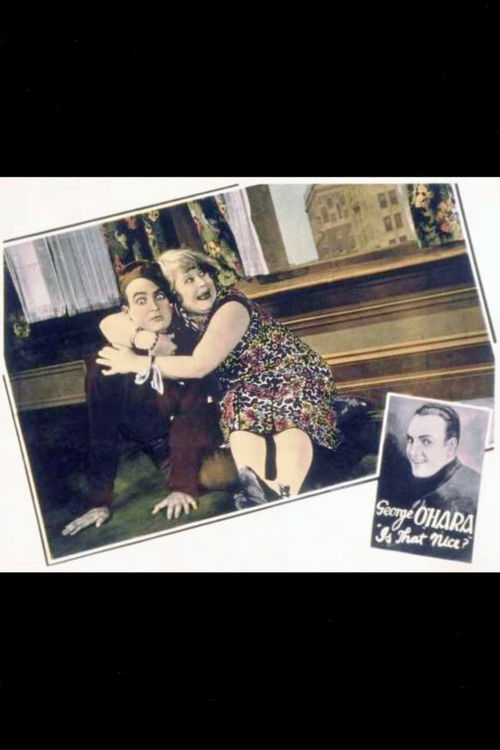
Is That Nice? is a product of the 1920s studio era, adhering to the era's standard genre conventions. While it includes active female characters, the power dynamics remain heavily skewed toward the male lead. The film's social landscape is narrow, focusing on a traditional newsroom hierarchy and heterosexual romance. It lacks the depth or diverse casting needed to challenge the period's social norms. Ultimately, the film functions as a standard crime-romance, reinforcing the social and political hierarchies typical of mid-1920s American cinema.
Category Breakdown
The film does not include any characters with non-binary gender identities or same-sex relationships. It features traditional romantic pairings, such as Tanner and Doris, which align with the heterosexual norms of the time.
Female characters like Doris Leslie and Winnie Nash play important roles in the story. However, they mainly support the male lead, leaving the main narrative ability to act with the male reporter.
The story focuses on an urban political environment and a newsroom setting. There is no indication of diverse ethnic backgrounds, suggesting a traditional, homogeneous demographic focus.
The storyline examines journalism and political corruption through a conventional lens. It follows standard genre clichés rather than offering radical or anti-institutional social critiques.
The film does not provide any information about characters with visible or invisible disabilities.
Present on Screen
Limited or Absent
Official Synopsis
Ralph Tanner, a cub reporter on the Morning Standard, writes a highly libelous story about John Gorman, the political boss of the city. Wilbert, the publisher, and Dyke, the managing editor, are highly pleased about the story...until they learn that Tanner has no proof to back his statements. Tanner, aided and/or hampered by a mystery girl, Doris Leslie, and a hefty stenographer from the paper, Winnie Nash, and her even-huskier boyfriend, Bill Schultz, sets out to gather proof.
1927
1936
1924
1928
1940

1928

1932
1935
No reviews yet. Be the first to share your thoughts on this movie!
Use the rating form above to leave a star rating and optional review.