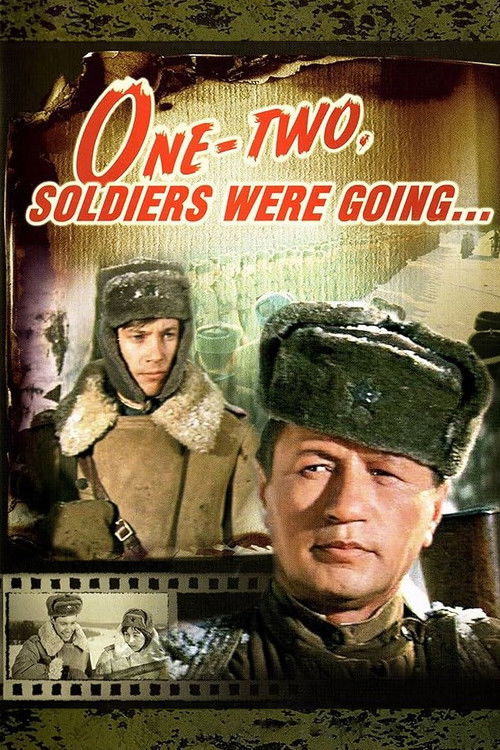
One-Two, Soldiers Were Going...
1976
No user ratings available yet
Representation score: 3.9 out of 10

Representation Score
Minimal
1972
Director
Yulian Semyonov, Vladimir Shredel
Runtime
91 minutes
Average Rating
No ratings yetNew Showbiz Analysis
The film opens on the stark, high-contrast landscape of the Soviet border, a visual metaphor for the rigid moral lines the state demands its citizens uphold. This 1972 drama, directed by Yulian Semyonov and Vladimir Shredel, sells a vision of unyielding duty where the integrity of the nation is paramount. The camera lingers on Valentin Gaft’s weathered face, treating his stoic competence as the film’s moral anchor, while the surrounding ensemble reinforces the idea that individual desires must be subordinated to collective vigilance. The sold meaning is clear: the state is the immutable standard, and those who waver pay the price. The film’s argument is that the true enemy is not just the foreign agent, but the temptation to doubt or be lenient. This traditional framing treats patriotism not as a political stance but as a natural, necessary virtue. The ending, with its focus on the group looking out over the landscape, suggests the war is merely paused, not over, reinforcing the idea that vigilance is a permanent condition. The film’s internal logic is consistent in its traditionalism. It does not seek to challenge the hierarchy of the state but to affirm it, presenting the border guards as the defenders of a civilized order against chaotic outside forces. The lack of female agency and the minor role of ethnic diversity are not oversights but reflections of the era’s cultural norms, where the unmarked Soviet male was the ideal citizen. The film’s moral verdict is one of endurance, where the reward is not individual glory but the survival of the state’s integrity.
Category Breakdown
Absent. The 1972 Soviet border drama focuses entirely on state duty and male camaraderie, with no depiction of same-sex intimacy or non-heteronormative identities.
Limited. Men hold all positions of authority and moral weight, while women appear as functional background figures or victims of the conflict. The narrative treats male stoicism and competence as the ideal, leaving female characters without agency or interiority.
Limited. The cast includes Central Asian actors like Talgat Nigmatulin, but they occupy minor supporting roles. The narrative centers on the unmarked Soviet majority, treating ethnic diversity as incidental to the primary theme of national defense.
Traditional. The film presents the Soviet state and border guards as the immutable moral standard, rewarding vigilance and punishing doubt. Patriotism and collective duty are treated as the highest virtues, with individual desires subordinated to the integrity of the nation.
Absent. No characters are depicted with physical or cognitive impairments. The body is presented solely as a tool for labor and combat, with injuries treated as temporary costs of duty rather than defining traits.
Present on Screen
Limited or Absent
1976
1977
1945
1962
1945
1984
1964
1945
No reviews yet. Be the first to share your thoughts on this movie!
Use the rating form above to leave a star rating and optional review.