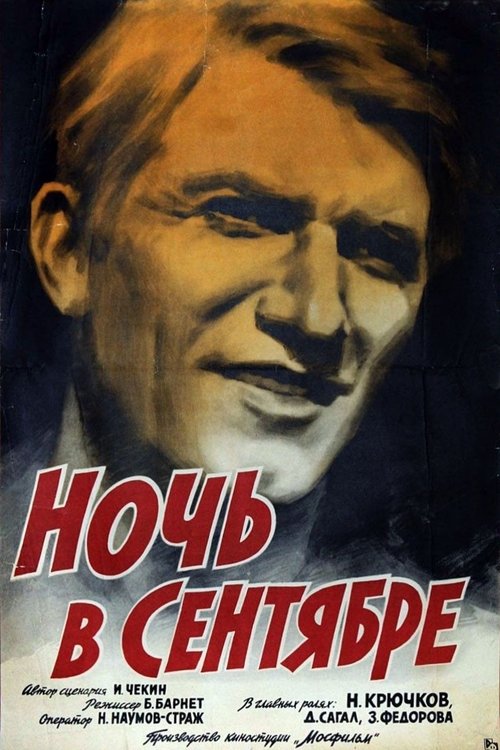
A Night in September
1939
No user ratings available yet
Representation score: 3.7 out of 10

Representation Score
Limited
1932
Director
Fridrikh Ermler, Sergei Yutkevich
Runtime
115 minutes
Average Rating
No ratings yetNew Showbiz Analysis
Shame (1932) uses cinema to reshape social hierarchies through Socialist Realism. It challenges capitalism and imperialist institutions, replacing them with a class-based collective identity. The film stands out in its depiction of ethnic diversity, using a multi-ethnic cast to promote the inclusive goals of the Soviet project. However, it lacks representation of LGBTQ+ identities and individuals with disabilities. Additionally, the narrative remains centered on male-dominated military and industrial hierarchies.
Category Breakdown
The film follows the traditional social structures of the early 1930s Soviet era and does not include any representation of LGBTQ+ identities or non-assuming gender matches what was assigned at birth gender identities.
Women are shown as active participants in the revolutionary struggle, but the narrative focuses on male-dominated military and industrial hierarchies.
The film highlights the multi-ethnic composition of the Red Army, including Central Asian and Caucasian identities, to create a unified proletarian identity.
The narrative presents an anti-capitalist framework and prioritizes secularism, portraying Tsarist and bourgeois structures as oppressive and dismantling religious influence.
The film does not focus on visible or invisible disabilities, and characters are primarily defined by their physical utility to the revolutionary cause.
Present on Screen
Limited or Absent
Official Synopsis
The story of an effort to catch "wreckers" at work in a Soviet factory. The film’s title-song called "The Song of the Counterplan", composed by Dmitri Shostakovich, became world famous and was adapted into "Au-devant de la vie", a notable song of the French socialist movement of the 1930s.
1939

1925
1935

1930
1936

1918
1985
1941
No reviews yet. Be the first to share your thoughts on this movie!
Use the rating form above to leave a star rating and optional review.