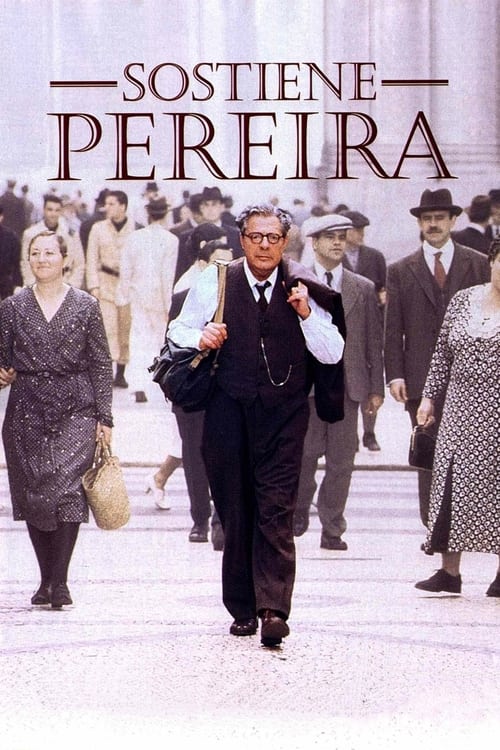
Pereira Declares
1995
No user ratings available yet
Representation score: 4.3 out of 10

Representation Score
Fair
1982
14Director
Juan Antonio Bardem
Runtime
157 minutes
Average Rating
No ratings yetNew Showbiz Analysis
The film serves as a sophisticated historical critique of the early 1930s. By centering on Georgi Dimitrov and the struggle against fascism, it actively challenges traditional Western political hierarchies and nationalist structures. While the narrative structure is inherently progressive in its systemic critique, it lacks specific character-level diversity regarding LGBTQ+ or disability representation. The focus remains on geopolitical tensions and internationalist alliances. Ultimately, the film's strength lies in its internationalist scope and its challenge to established power dynamics, even if individual character identities remain unverified.
Category Breakdown
The film does not include any visible evidence of LGBTQ+ identities or queer narratives. The focus remains solely on political and ideological alliances.
The story centers on high-stakes diplomacy and political maneuvering, which are often dominated by men in historical dramas. It suggests a potential for challenging patriarchal structures through collective action.
By centering a Bulgarian revolutionary in Moscow, Berlin, and Vienna, the film adopts a pan-European scope. This disrupts Western-centric period drama norms by emphasizing an internationalist perspective.
The narrative promotes progressive cultural framing by criticizing nationalist and imperialist structures. It focuses on the fight against fascism and the promotion of internationalist alliances.
There is no indication of characters with physical or neurodivergent disabilities. The documentation provides no evidence of disability representation.
Present on Screen
Limited or Absent
Official Synopsis
The action takes place in Moscow, Berlin and Vienna in years 1932 and 1933, a time when the great Bulgarian revolutionary and internationalist Georgi Dimitrov was actively involved in establishing a broad alliance of democratic forces against the emerging threat of war and fascism.
1995

2008
2013
2004
1955

2002
1972
1995
No reviews yet. Be the first to share your thoughts on this movie!
Use the rating form above to leave a star rating and optional review.