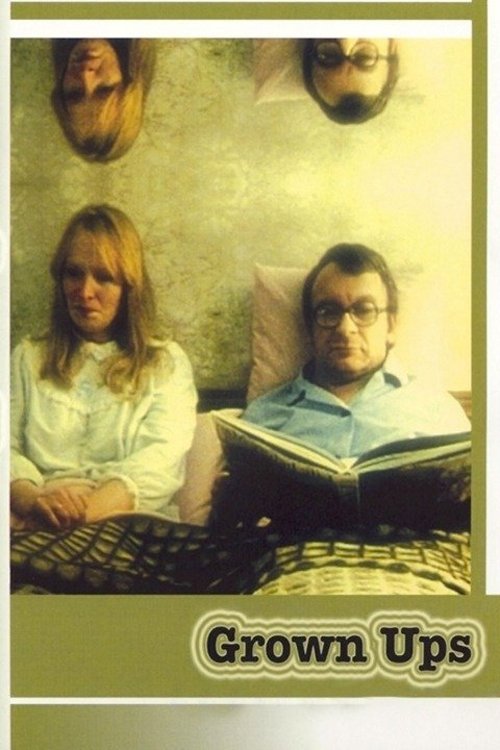
Grown-Ups
1980
No user ratings available yet
Representation score: 5.6 out of 10
Representation Score
Fair
1993
PGDirector
Waris Hussein
Runtime
79 minutes
Average Rating
No ratings yetNew Showbiz Analysis
The film primarily serves as a psychological character study that challenges the stability of traditional Western domesticity. It uses the protagonist's alienation to critique the social pressures of mid-20th-century British life. While the narrative offers a strong critique of gender roles and cultural norms, it lacks explicit representation in several areas. The international elements provide necessary context, but the focus remains on internal psychological shifts. Overall, the work disrupts standard romantic drama clichés by prioritizing individual identity over the preservation of patriarchal marital units.
Category Breakdown
The film suggests that Margaret's psychological shifts hint at a departure from traditional heterosexual relationships. Her disdain for her fiancé implies a potential rejection of conventional paths, though her queer identity is not explicitly confirmed.
The narrative challenges traditional gender roles by focusing on Margaret's internal strength. It critiques the domestic roles through the portrayal of her mother's repressed marriage and her fiancé's foolish behavior.
The film introduces an internationalist element through the character Marie-Claire and the Egyptian setting. These non-Western influences help the protagonist evolve psychologically beyond the confines of English suburbia.
The story critiques Western institutions by framing marriage as a site of performative stability. It explores the tension between personal morality and the rigid social conventions of middle-class life.
There are no identifiable depictions of physical or neurodivergent disabilities within the narrative.
Present on Screen
Limited or Absent
Official Synopsis
Margaret is a shy, pale, middle-class Englishwoman who is reluctantly engaged to her older, twittish neighbor Syl. Both bride- and groom-to-be still live with their mothers in the humdrum suburb of Croydon. However Margaret has been acting strangely ever since a vacation in Egypt, where she stayed with her mother's friend Marie-Claire. She secretly despises Syl, but does not resist when her mother, who has repressed the failure of her own matrimony, insists on marriage for the sake of social convention.
1980
1983

2017

2005
1975
2003

2019

1996
No reviews yet. Be the first to share your thoughts on this movie!
Use the rating form above to leave a star rating and optional review.