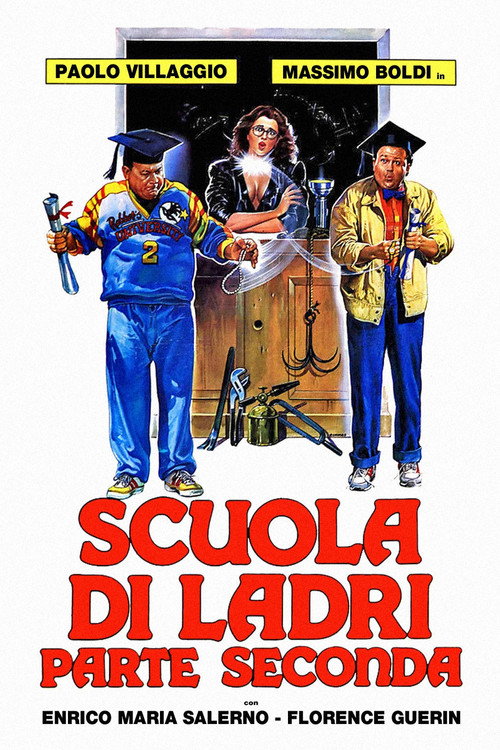
School of Thieves 2
1987
No user ratings available yet
Representation score: 4.0 out of 10
Representation Score
Limited
1986
Director
Neri Parenti
Runtime
96 minutes
Average Rating
No ratings yetNew Showbiz Analysis
School of Thieves is a traditional 1980s slapstick farce that emphasizes physical humor and broad character types over social commentary. The film focuses almost exclusively on a male-centric ensemble of Italian comedic actors. The production adheres to the era's typical norms, providing a culturally homogeneous experience. While it includes a character with a physical disability, the narrative uses this disability mainly as a plot motivator rather than exploring meaningful ability to act. Overall, the film lacks the complexity needed to challenge social hierarchies. It remains a localized genre piece that relies on conventional comedic clichés and traditional character studies.
Category Breakdown
The film focuses on family dynamics and the incompetence of its characters within a slapstick framework. It does not include any non-straight or non-cisgender identities or narratives that challenge the assumption that everyone is straight or cisgender.
The story revolves around a group of nephews and an uncle, with a predominantly male cast. It does not provide much evidence of women taking control or challenging traditional gender roles.
This mid-1980s Italian production features a cast made up mostly of local comedic actors. There is no indication of diverse ethnic backgrounds or multi-layered casting.
The film uses theft as a comedic device rather than a critique of societal structures. It sticks to traditional slapstick humor rather than presenting anti-establishment or secular viewpoints.
A wealthy character with a physical disability serves as the main plot driver. However, the disability is used primarily as a comedic element rather than a realistic depiction of living with a disability.
Present on Screen
Limited or Absent
Official Synopsis
Frenetic in its pacing and with miniscule character development, this trite slapstick farce stars three Italian comics - Paolo Villaggio, Lino Banfi, and Massimo Boldi as the idiot-nephews of a wealthy invalid (Enrico Maria Salerno). The uncle's plan is to teach the trio how to successfully steal for a living but the plan does not have a chance against their exaggerated ineptitude.
1987

1958
1959

1980
1966
1969
1959
1959
No reviews yet. Be the first to share your thoughts on this movie!
Use the rating form above to leave a star rating and optional review.