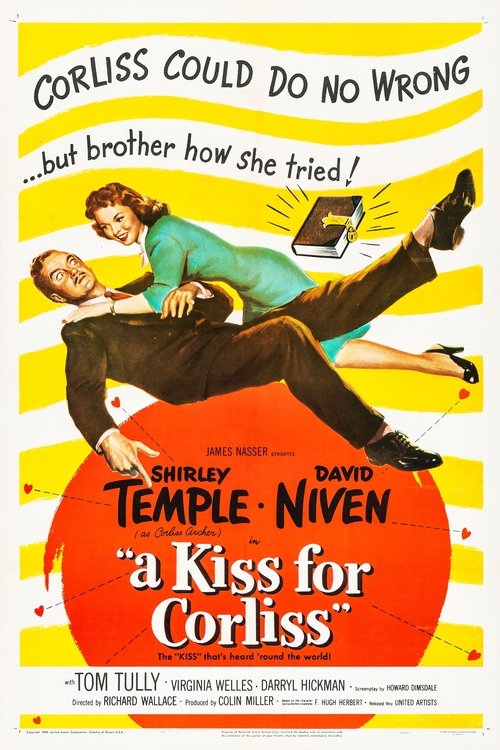
A Kiss for Corliss
1949
No user ratings available yet
Diversity score: 1.4 out of 10

1927
PassedDirector
John G. Adolfi
Runtime
60 minutes
Average Rating
No ratings yetSynopsis
William Bradberry, an absent-minded Egyptologist, turns from a henpecked husband to a dominating one who, unknown to his daughter Betty and wife, writes theatre musical comedy on the side. And saves his daughter from the unsavory millionaire, Victor Smith she almost marries before she marries the decent man Tommy Dawson. A lost film.
Overall Score
Minimal
Category Breakdown
LGBTQ+ Representation
The film lacks any evidence of non-heteronormative identities or same-sex intimacy. The narrative focuses entirely on traditional romantic pairings.
Gender Representation
Gender dynamics rely on established comedic tropes. The protagonist's shift from henpecked to dominating reinforces conventional patriarchal hierarchies rather than subverting them.
Racial & Ethnic Diversity
Despite the protagonist being an Egyptologist, there is no evidence of non-Anglo-Saxon characters in high-agency roles. The casting appears to follow era-specific homogeneity.
Religious & Cultural Diversity
The plot reinforces Western social hierarchies and moral binaries. It focuses on preserving the family unit through the father's reclaimed authority.
Disability Representation
There is no mention of characters with visible or invisible disabilities. The synopsis contains no references to neurodivergence or physical impairments.
Strengths
Areas for Improvement
AI Analysis
This silent-era comedy operates within a highly traditionalist framework. The narrative structure centers on a male protagonist's personality shift, which serves to reinforce domestic hierarchies rather than challenge them. The film relies on standard moral binaries, such as the choice between an unsavory millionaire and a decent man. This reinforces conventional social structures and the preservation of the traditional family unit. Because the film is lost, the lack of visual evidence limits a deeper analysis of performance. However, the structural elements suggest a work that adheres strictly to 1920s social norms.
1949
1949
1939
1922
1941
1950
1939
1918
1929

1909
1923
1919
No reviews yet. Be the first to share your thoughts on this movie!
Use the rating form above to leave a star rating and optional review.