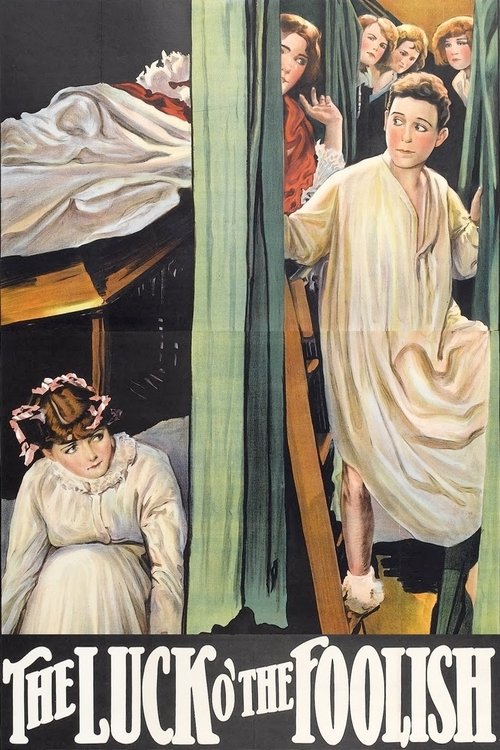
The Luck o' the Foolish
1924
No user ratings available yet
Diversity score: 2.1 out of 10

1924
PassedDirector
Del Andrews
Runtime
45 minutes
Average Rating
No ratings yetSynopsis
Freddy Wetherill and his bride, Hyla, quarrel at her mother's beach cottage, and Hyla sends her new husband home alone. Seeking distraction from his troubles, Freddy enters a vaudeville theater where Undine, "the diving Venus," and her trained seal, Bubbles, are performing. Outside the theater, Freddy meets Undine's fiancé, George Fitzgerald, and becomes involved in George's effort to hide Undine's seal from a bill collector armed with an order of attachment because of an unpaid hotel bill. Complications arise when Freddy Wetherill's dying rich uncle, Cato Dodd, notifies him that he wants Hyla to nurse him. To insure he stays in his uncle's will, Freddy substitutes Undine for Hyla and takes George along to act as his "valet." Naturally, Bubbles comes along, too. This movie is presumed to be lost.
Overall Score
Minimal
Category Breakdown
LGBTQ+ Representation
The plot centers on traditional marital friction and heteronormative romantic entanglements. No non-cisnormative identities or same-sex intimacy are present in the narrative.
Gender Representation
While Hyla shows agency by sending her husband away, the story remains driven by male-centric deceptions. The characters largely adhere to 1920s gendered expectations.
Racial & Ethnic Diversity
The character descriptions suggest a homogeneous, likely Anglo-centric social circle. There is no indication of racial or ethnic diversity within the available synopsis.
Religious & Cultural Diversity
The film emphasizes Western social structures like inheritance and nuclear family stability. Comedic deceptions are used rather than critiques of social or institutional systems.
Disability Representation
The narrative contains no mention of characters with visible or invisible disabilities.
Strengths
Areas for Improvement
AI Analysis
The Galloping Fish is a conventional silent comedy that operates strictly within the social frameworks of the 1920s. The narrative relies on traditional domestic hierarchies and comedic misunderstandings rather than subversive themes. Representation is minimal, with the plot focusing on heteronormative marriage and male-driven social maneuvering. The lack of racial or ethnic diversity suggests a homogeneous cast typical of the era's mainstream comedies. Ultimately, the film functions as a standard period piece that reinforces the status quo of its time through its focus on class, inheritance, and traditional gender roles.
1924
1919
1928
1909

1928
1931
1934

1929
1917
1920
1936
1919
No reviews yet. Be the first to share your thoughts on this movie!
Use the rating form above to leave a star rating and optional review.