
Sunday Punch
1942
No user ratings available yet
Representation score: 1.3 out of 10
Representation Score
Minimal
1918
Director
Ottar Gladvedt
Runtime
52 minutes
Average Rating
No ratings yetNew Showbiz Analysis
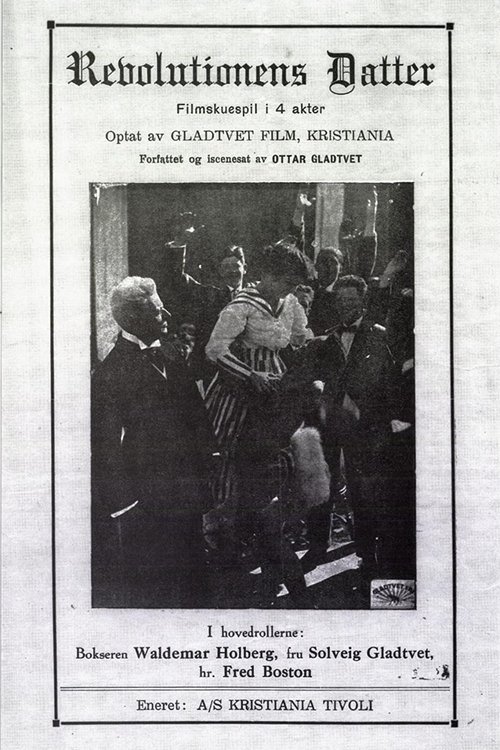
Revolutionens datter is a traditional period piece that emphasizes localized folk storytelling and individual physical achievement. The narrative centers on the celebrity of boxer Waldemar Holberg, highlighting combat sports and masculine competence. The film reflects the social and cultural constraints of early 20th-century Norway. It lacks the intentionality to challenge conventional hierarchies or provide diverse perspectives, focusing instead on the standard dramatic and romantic formulas of the time. Ultimately, the production offers a snapshot of regional cinema, emphasizing physical merit and traditional social structures rather than progressive or diverse viewpoints.
Category Breakdown
The film does not include any characters with non-traditional gender identities or narratives that question the assumption that everyone is straight. It seems to follow the typical social norms of 1918 Norway.
Despite suggesting a main female character, the story centers around the athletic fame of Waldemar Holberg. The narrative highlights traditional masculine struggles and physical prowess.
As a silent-era Norwegian production, the film reflects a homogeneous society. There is no indication of multi-ethnic casting or international diversity.
The film uses the 'folke komedie' genre to celebrate local customs and community identity. It reinforces traditional ideas of strength and social order through its focus on individual triumph.
There is no documented portrayal of physical or neurodivergent disabilities within the film's known character arcs.
Present on Screen
Limited or Absent
Official Synopsis
REVOLUTIONENS DATTER starred Danish boxer Waldemar Holberg. Holberg held a version (Australian) of the welterweight title for a month in 1914. From what I could see he made two films, in Norway in 1918, while fighting there from 1917 to 1919. So his film's survival rate is 50%. Billed as a 'folke komedie' in 4 acts (I saw no comedy), it does end with the obligatory boxing match. An interesting note is that the actor playing his opponent is Fred Boston. Waldemar Holberg knocked out a boxer named Fred Boston in Oslo in 1918, but it is Boston's only recorded match. Makes one wonder.....
1942

2016
1894

1928
1916
1895
1894
1945
No reviews yet. Be the first to share your thoughts on this movie!
Use the rating form above to leave a star rating and optional review.