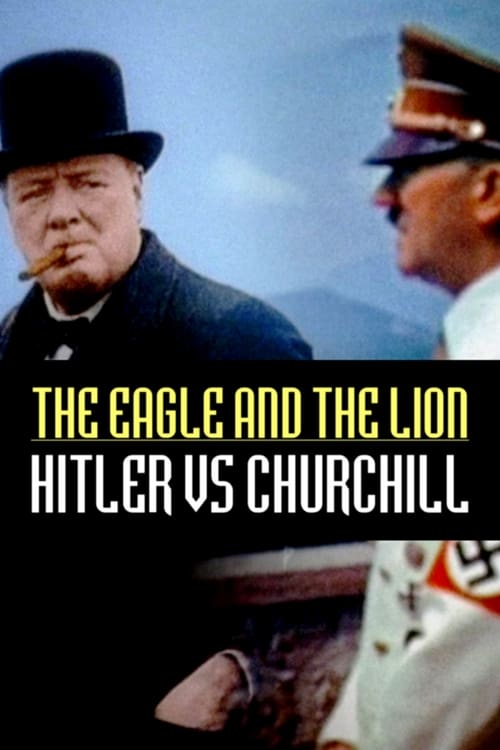
The Eagle and the Lion: Hitler vs Churchill
2017
No user ratings available yet
Representation score: 1.9 out of 10

Representation Score
Minimal
2009
Director
Ullrich Kasten
Average Rating
No ratings yetNew Showbiz Analysis
This documentary reconstructs the history of autocratic power, focusing on the geopolitical collision between two totalitarian regimes. It prioritizes the state-level leadership and hyper-masculine control, resulting in a low diversity score. The film's narrow focus on state-level leadership and traditional hierarchies means it largely ignores the experiences of underrepresented groups. It provides a complex look at the deconstruction of traditional Western institutions and international law, but remains a study of specific European power dynamics without seeking to diversify the historical lens.
Category Breakdown
The film does not center on LGBTQ+ identities or non-straight relationships. Instead, it focuses on the political maneuvering of regimes during this period, rather than the experiences of those with underrepresented sexualities.
The narrative emphasizes patriarchal, authoritarian structures and is dominated by male political and military figures. This reinforces traditional power hierarchies.
The central political actors are predominantly white European and Eurasian men. While the film acknowledges victims of the Holocaust and purges, the protagonists remain racially uniform.
The film explores the suppression of religious institutions and the co-optation of spiritual sentiments. It portrays traditional morality as a casualty of totalitarianism and shifting state interests.
The film does not focus on disability or neurodivergence. The scope remains limited to high-level political and military movements without exploring characters through a meaningful lens.
Present on Screen
Limited or Absent
Official Synopsis
A double portrait of two dictators who were thousands of miles apart but were constantly fixated on each other.
2017
1935
2019
1999
1998

2012

2020
1994
No reviews yet. Be the first to share your thoughts on this movie!
Use the rating form above to leave a star rating and optional review.