Journal de France
2012
No user ratings available yet
Diversity score: 3.9 out of 10
2019
Director
Jane Magnusson
Runtime
109 minutes
Average Rating
No ratings yetSynopsis
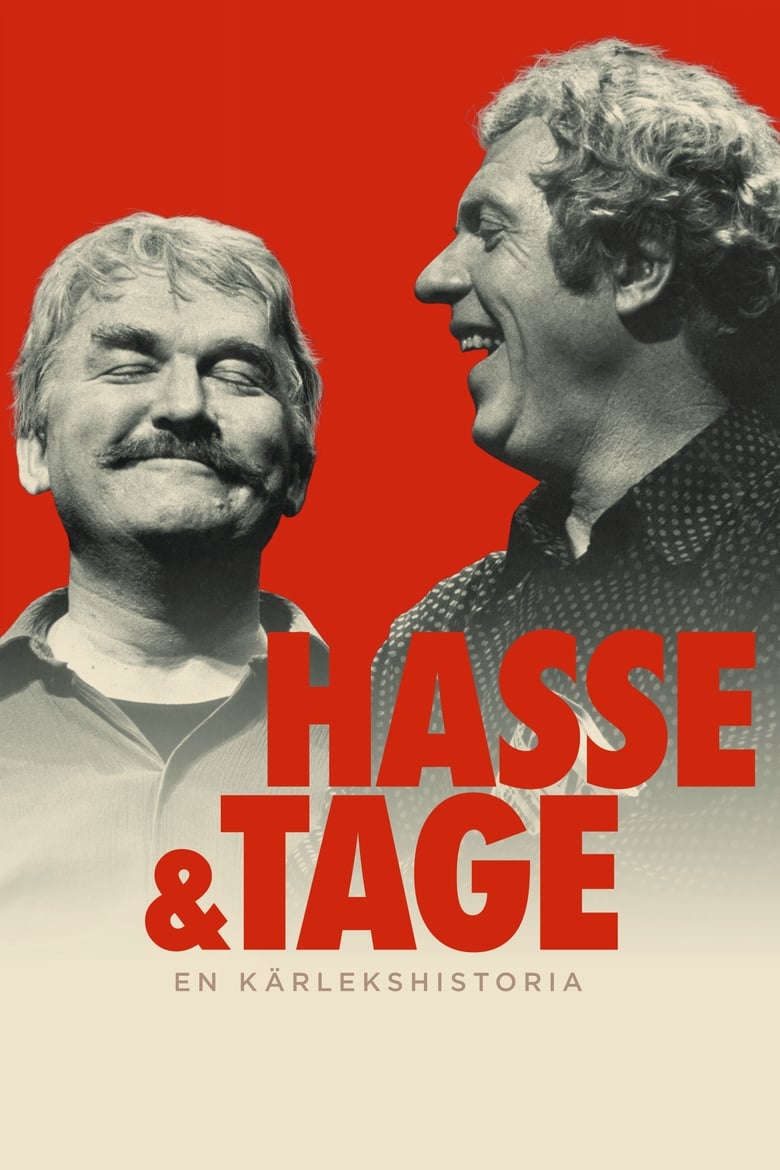
Hasse and Tage were best friends for over 30 years. Their films, shows, songs and books influenced an entire nation and were the glue that held people's home together. As a comedic duo, they united right-wing ghosts and anarchists in laughter. When Tage dies prematurely, his children lose a father, Hasse a father figure and all of Sweden a country father. And when Palme dies just months after Tage, the Swedish stable society begins to crumble. For the first time, the Alfredson and Danielsson families open up the archives and give us exclusive access to their stories, photographs and recordings.
Overall Score
Fair
Category Breakdown
LGBTQ+ Representation
The film centers on heteronormative domesticity and the professional partnership of the two men. It does not explicitly feature queer narratives or non-cisnormative identities as primary plot drivers.
Gender Representation
Narrative agency is concentrated within the male creative duo. While it touches on domestic complexities and marriages, it reflects the traditional gender hierarchies of the 1960s Swedish intellectual class.
Racial & Ethnic Diversity
The documentary reflects the demographic homogeneity of mid-20th-century Stockholm. The subjects are predominantly white, maintaining historical accuracy regarding the specific cultural milieu of the era.
Religious & Cultural Diversity
The film offers a nuanced view of Swedish society during a period of social fragmentation. It portrays the duo as a unifying force navigating a changing national landscape.
Disability Representation
There is no evidence of visible or invisible disabilities being portrayed as a central narrative element in this biographical retrospective.
Strengths
Areas for Improvement
AI Analysis
This documentary functions as a historical retrospective, prioritizing biographical authenticity over modern intersectional storytelling. It captures the specific cultural and demographic realities of mid-century Sweden, focusing on the profound bond between Hasse Alfredson and Tage Danielsson. The film's narrow scope is a byproduct of its subject matter. By documenting the lives of these specific Swedish icons, it naturally reflects the era's lack of racial and LGBTQ+ visibility. Ultimately, the work serves as a preservation of cultural memory. It succeeds in its historical mission but does not attempt to deconstruct or subvert traditional social hierarchies.
2012
2017
2017
1986
2016
2009
2022
2005
2019
2016
2009

2016
No reviews yet. Be the first to share your thoughts on this movie!
Use the rating form above to leave a star rating and optional review.