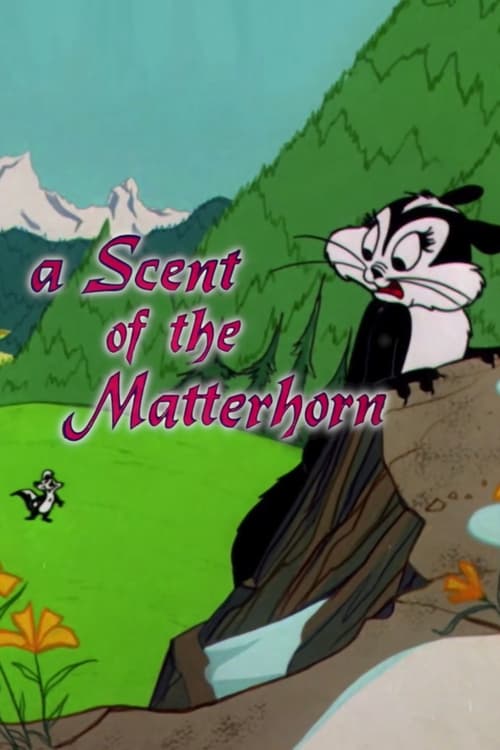
A Scent of the Matterhorn
1961
No user ratings available yet
Diversity score: 2.8 out of 10

1957
Director
Chuck Jones
Runtime
6 minutes
Average Rating
No ratings yetSynopsis
The amorous skunk, Pepé le Pew, chases a female cat by the seaside, under the sea and finally on a desert island.
Overall Score
Limited
Category Breakdown
LGBTQ+ Representation
The film focuses on an obsessive pursuit rather than explicit identity markers. Pepé le Pew's behavior functions as a comedic trope of unrequited obsession rather than a commentary on non-normative social behaviors.
Gender Representation
The narrative relies on a traditional pursuit dynamic where the female cat serves as the object of desire. Her agency is limited to evasion, reinforcing mid-century gendered power hierarchies.
Racial & Ethnic Diversity
As an anthropomorphic animation, the film avoids human racial or ethnic signifiers. The characterization is homogeneous and offers no engagement with intersectional or ethnic identity.
Religious & Cultural Diversity
The story operates within a vacuum of cartoon logic, detached from religious or institutional critique. It presents situational ethics where social transgressions are framed as comedy rather than moral failings.
Disability Representation
There is no evidence of characters with visible or invisible disabilities being utilized as plot devices or central figures.
Strengths
Areas for Improvement
AI Analysis
Touché and Go is a quintessential mid-century animated short that prioritizes character-driven absurdity over social complexity. The narrative structure is built upon a repetitive pursuit-based comedy that adheres strictly to the era's production standards. The film lacks meaningful representation across most categories, relying instead on established archetypes. It functions as a standard entertainment product that does not challenge the social hierarchies or traditional gender dynamics of the 1950s. Because the characters are anthropomorphic animals, the film avoids human-centric diversity entirely. This results in a work that is culturally and socially insulated, focusing purely on the slapstick mechanics of the Pepé le Pew series.
1961
1962
1956
1962
1965
1939
1964
1952
1965
1944

1949
1957
No reviews yet. Be the first to share your thoughts on this movie!
Use the rating form above to leave a star rating and optional review.