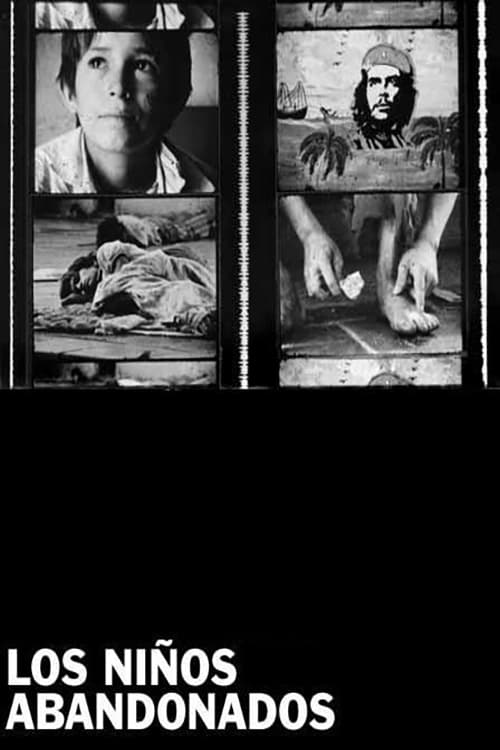
The Abandoned Children
1975
No user ratings available yet
Diversity score: 6.4 out of 10

2002
Not RatedDirector
Josep Maria Domènech, Carlos Bosch
Runtime
120 minutes
Average Rating
No ratings yetSynopsis
In the summer of 1994, a team of public television reporters filmed and interviewed seven Cubans a few days before their risky venture of setting out to sea in homemade rafts to reach the coast of the United States. Six made it far enough to be picked up at sea by the U.S. Coast Guard. When these balseros (rafters) were finally allowed to go to the United States, the film crew went with them to a string of several cities. Seven years later, the film crew visits them again, to discover that their destiny has been in the United States. Theirs is a true story about some of the authentic survivors of our times, the human adventure of people who are shipwrecked between two worlds.
Overall Score
Good
Category Breakdown
LGBTQ+ Representation
The film focuses on the migratory journey of Cuban refugees. There is no explicit evidence regarding the presence of LGBTQ+ characters or non-heteronormative identities.
Gender Representation
The narrative centers on the collective struggle for survival during raft crossings. While female voices may assert agency, the film focuses more on shared socio-political hardship.
Racial & Ethnic Diversity
The documentary achieves high marks by centering a non-Anglo-Saxon, Cuban demographic. It provides depth to a population often reduced to mere statistics in migration debates.
Religious & Cultural Diversity
The film highlights the necessity of high-risk movement to escape oppressive conditions. It critiques socio-political structures and deconstructs traditional geopolitical hierarchies.
Disability Representation
Physical trauma and exhaustion are likely present due to the nature of the journey. However, there is no evidence of intentional, agency-driven disability representation.
Strengths
Areas for Improvement
AI Analysis
Cuban Rafters offers a profound look at systemic displacement by centering the lived experiences of Cuban refugees. By focusing on those undertaking high-risk migrations, the documentary disrupts Western-centric narratives and provides a platform for marginalized voices. The film excels in racial and cultural representation, using the refugee experience to critique global power dynamics and state-imposed limitations. It moves beyond mere statistics to explore the human condition during a crisis of survival. However, the documentary lacks specific focus on LGBTQ+ identities or intentional disability representation. While the physical toll of the journey is inherent, the narrative prioritizes the collective socio-political struggle over individual identity-driven arcs.
1975

2019
2016
2016
2001

2021

2015

2020

2005
2008
2017
2000
No reviews yet. Be the first to share your thoughts on this movie!
Use the rating form above to leave a star rating and optional review.