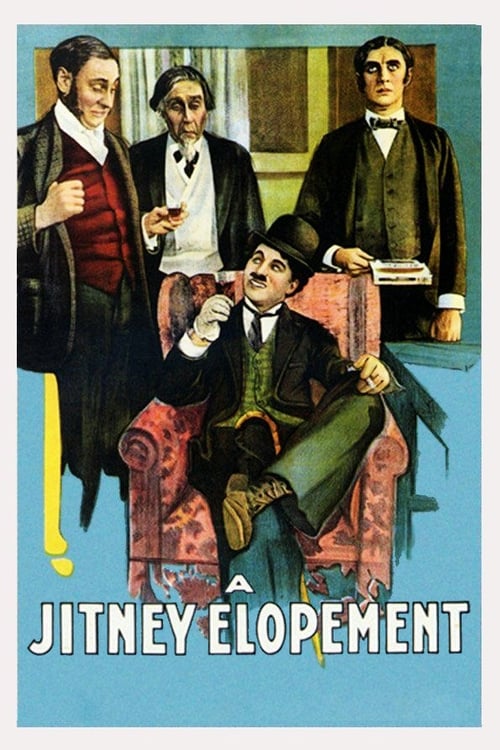
A Jitney Elopement
1915
No user ratings available yet
Diversity score: 4.1 out of 10

1914
Not RatedDirector
Charlie Chaplin
Runtime
12 minutes
Average Rating
No ratings yetSynopsis
The hero, a janitor played by Chaplin, is fired from work for accidentally knocking his bucket of water out the window and onto his boss the chief banker (Tandy). Meanwhile, one of the junior managers (Dillon) is being threatened with exposure by his bookie for gambling debts unpaid. Thus the manager decides to steal from the company.
Overall Score
Limited
Category Breakdown
LGBTQ+ Representation
The film lacks any explicit depiction of non-cisnormative identities or same-sex intimacy. The narrative focuses strictly on class-based conflict and individual criminality.
Gender Representation
The story centers on a male-dominated professional hierarchy involving a janitor, a boss, and a manager. There is a notable absence of female agency or presence in the plot.
Racial & Ethnic Diversity
The narrative focuses on a localized banking conflict and does not indicate a multi-ethnic cast. It appears to reflect the homogeneous social structures of the early silent era.
Religious & Cultural Diversity
The film critiques Western institutional stability by framing the workplace as a site of corruption. It deconstructs capitalist reliability through themes of systemic misfortune and criminality.
Disability Representation
There is no evidence regarding the depiction of physical, sensory, or neurodivergent characters in this work.
Strengths
Areas for Improvement
AI Analysis
The film operates primarily as a class-based satire rather than a diverse social study. While it lacks intersectional breadth regarding gender, race, and LGBTQ+ identity, it offers a progressive critique of institutional authority. Chaplin utilizes the underdog trope to challenge the perceived moral superiority of economic hierarchies. The narrative subverts the idea of the workplace as a stable, ethical environment by highlighting systemic incompetence and corruption. Ultimately, the film's value lies in its social commentary on class struggle, even as it remains limited by the demographic homogeneity typical of its era.
1915

1914
1916
1914
1919

1915

1915
1915
1916

1916
1915
1914
No reviews yet. Be the first to share your thoughts on this movie!
Use the rating form above to leave a star rating and optional review.