Carrément à l'ouest
2001
No user ratings available yet
Representation score: 4.5 out of 10
Representation Score
Limited
2001
Director
Bruno Chiche
Runtime
80 minutes
Average Rating
No ratings yetNew Showbiz Analysis
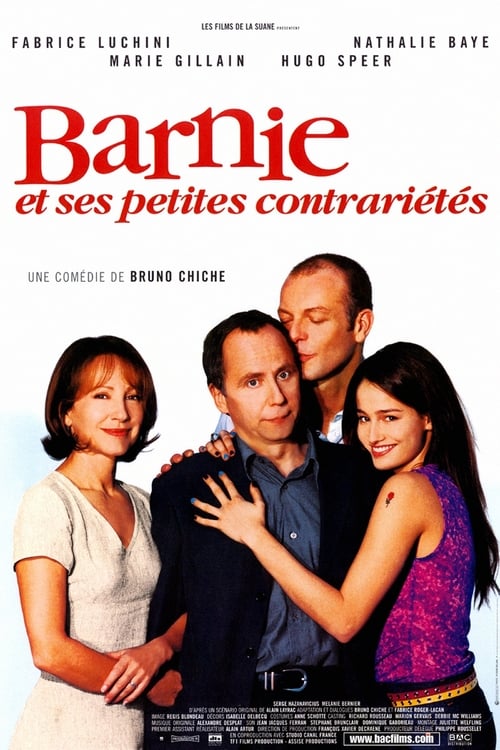
Barnie's Minor Annoyances is a character-driven film that explores infidelity and social complications. It challenges traditional monogamous structures by presenting a protagonist with competing romantic loyalties across different genders. However, the film lacks depth in exploring the intersections of identity. The narrative seems to rely on traditional comedic formulas, focusing primarily on the male protagonist's struggles and decisions. Ultimately, while the film questions traditional marriage, it operates within a standard European comedic framework that lacks broader diverse representation.
Category Breakdown
The film includes a male protagonist who has both a female and a male lover, which deviates from traditional heterosexual relationships. However, it is unclear whether these relationships are explored deeply or used for comedic purposes.
The story revolves around a male protagonist's infidelity, which drives the narrative. Female characters demand accountability, but the story focuses on the male protagonist's indecision and personal annoyances, rather than challenging traditional gender roles.
The narrative is set in European locations such as Calais, London, and Venice. There is no mention of specific racial or ethnic diversity among the characters.
The story questions the sanctity of the nuclear family and monogamous marriage, presenting a postmodern view of interpersonal ethics where traditional domesticity is a source of conflict.
There is no information provided about characters with physical, sensory, or neurodivergent disabilities.
Present on Screen
Limited or Absent
Official Synopsis
Barnie lives in Calais but works in London. Everyday, he takes the Eurostar to go to his office. Although he is married to Lucie, Barnie has two lovers in London: Margot, a young and fresh advertising executive, and Mark, a hot 35 years old auctioneer. Everything could work out fine like that, until Margot, Mark and Lucie separately offer Barnie the same birthday present: a return ticket to Venice on the Orient-Express, and on the same dates. What will Barnie do? Who will he choose to go with? After thinking that going with Lucie could actually save his marriage, problems are not over: Margot and Mark both show up at Barnie and Lucie's house, pretending to be a couple, and asking Barnie for some explanations. Which he obviously can't give...
2001
1970

2013
1986

2012

1998

1961

2010
No reviews yet. Be the first to share your thoughts on this movie!
Use the rating form above to leave a star rating and optional review.